Major Albert Ward MBE MM | Military Service (WWII +) | Medals | (Father) Private William Wright Ward WWI









Major Albert Ward MBE MM | Military Service (WWII +) | Medals | (Father) Private William Wright Ward WWI
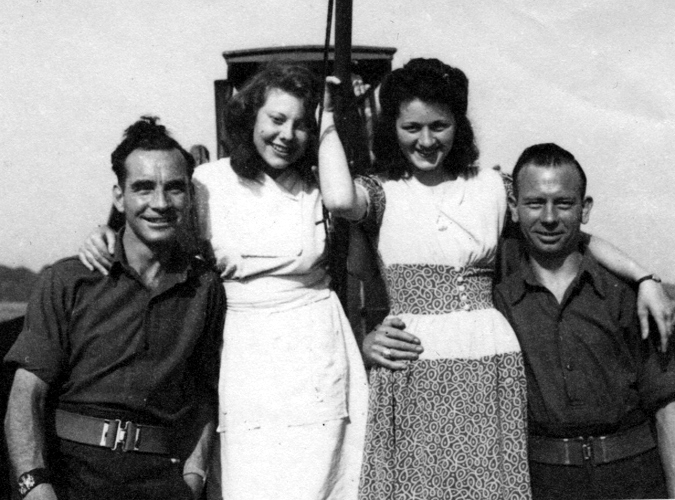
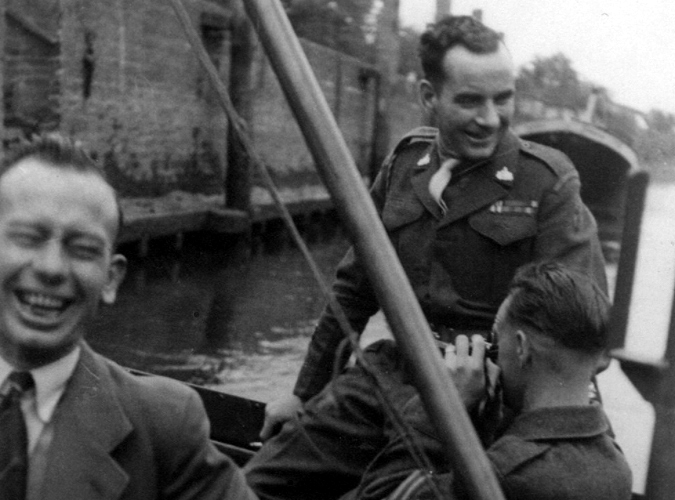
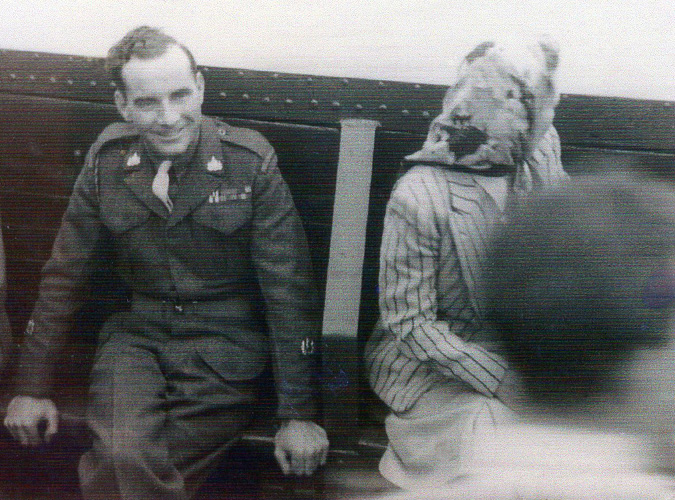
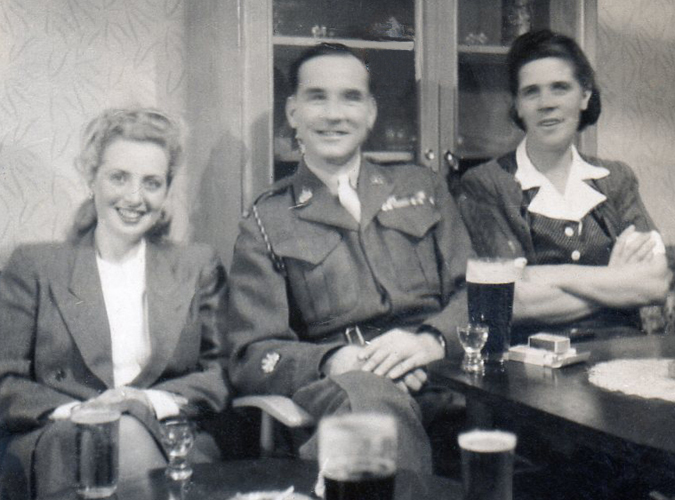
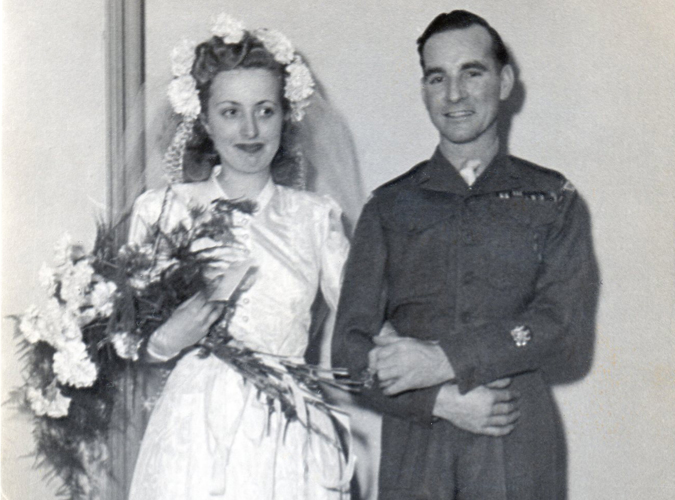
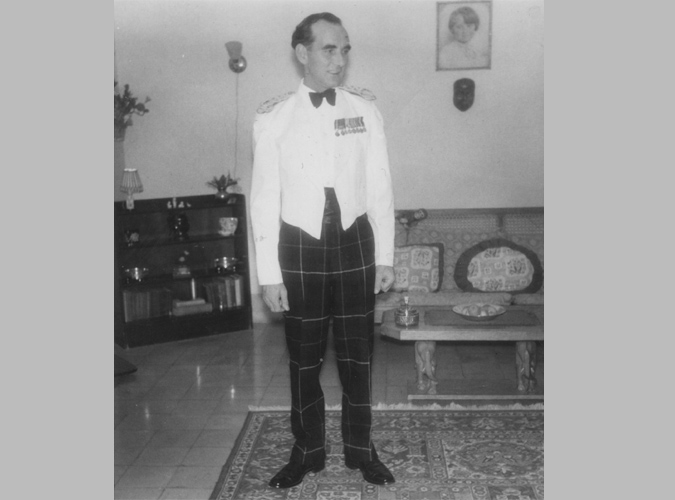
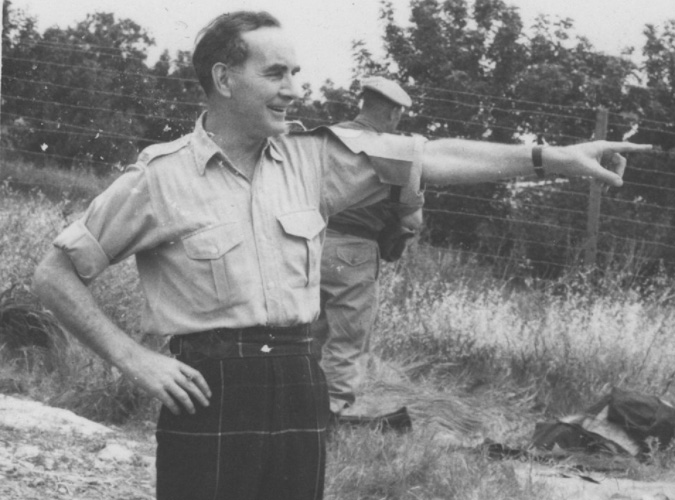
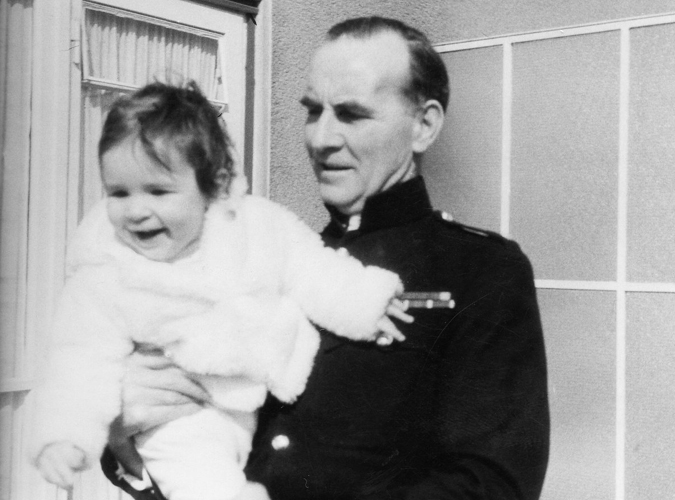
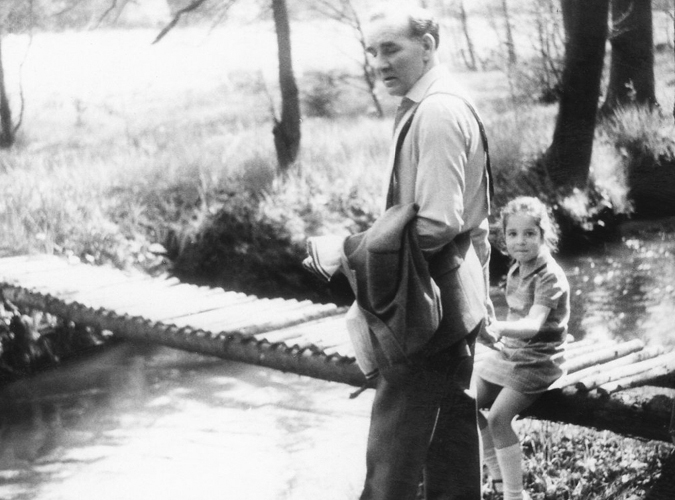
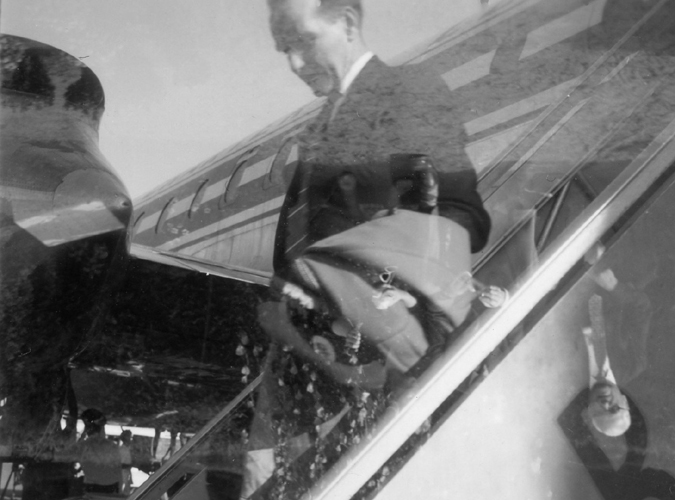
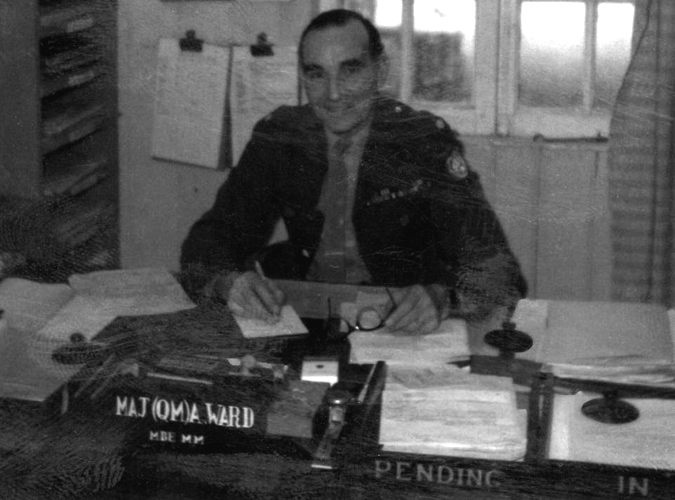
Major Albert Ward (of Edinburgh & my Daddy), graduated from Queen Victoria Military School and served in the British Army with:
Born: 1914, 24 December at 144 Dumbiedykes Road, Edinburgh.
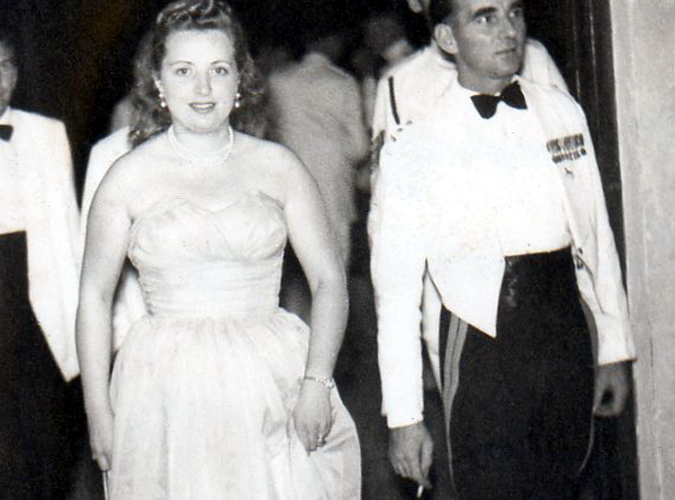
Stellar Wife: Ursula (Uschi) Augusta Maria Baingo. Married in 1949, 21 December, in the Church of Scotland Chapel, Hamburg Germany
Occupation: Army
Died: 8 June 2003, buried in Mortanhall Cemetery, Edinburgh
Parents:
Siblings: William James Wright Ward (1900 - 1991), Ernest Francis Ward (1902 - 1947), Agnes Rose Wright Ward (1904 - 1965), Doris Ward (1905 / 1908 - 1932?), Bryan Robertson Ward (1910 - 1996?)... ?
Grandparents:
Great Grandparents:
William Wright Ward (my grandfather) was born on 21 November 1876 to Peter Ward and Agnes Ward nee Wright at 87 (or 89) Bonnington Road, Leith, Edinburgh. Some time after 1891, unlike his siblings, for some reason William left Edinburgh and on 21 Jul 1900 William Ward married Rose Ann Doonan in Brentford, Middlesex, London (14 Eastbourne Road), worked as a carman and had three children, there. By 1908, he returned to Edinburgh with his wife and children, where he worked as a painter, resided at 144 Dumbiedykes Road, Edinburgh and had three more children. As they say, an ordinary chap trying to make the best of his means.
On the 28 July 1914, Austria-Hungary declared war on Serbia, after the assassination of Archduke Franz Ferdinand, the heir to the Austro-Hungarian throne, and his wife were assassinated, while they were being driven through Sarajevo, the capital of Bosnia and Herzegovina, which had been formally annexed by Austria-Hungary in 1908. Days later, Germany declared war on Russia on 1 August and France on 3 August, 1914. After Germany invaded neutral Belgium, on August 4, 1914, Britain declared war on Germany.
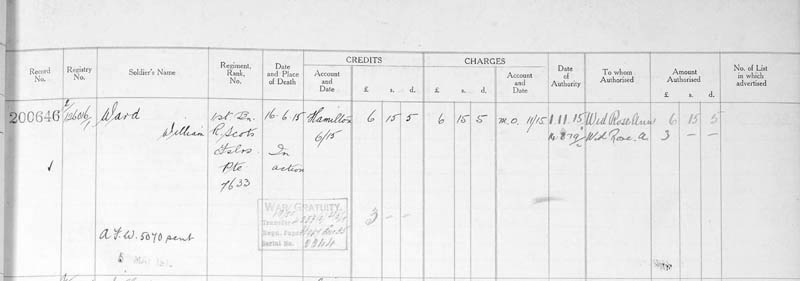
Did he die during the first assault on the Bellewaarde Ridge, Belgium by the 3rd Division of the British Expeditionary Force?. William Wright Ward died aged 39, circa six months after enlisting, leaving behind a widow and six children including, Daddy just aged circa three months old. My grandfather, like so many other champion British men, was a lionheart to sacrifice his life for the freedom of his country, for his family and others.
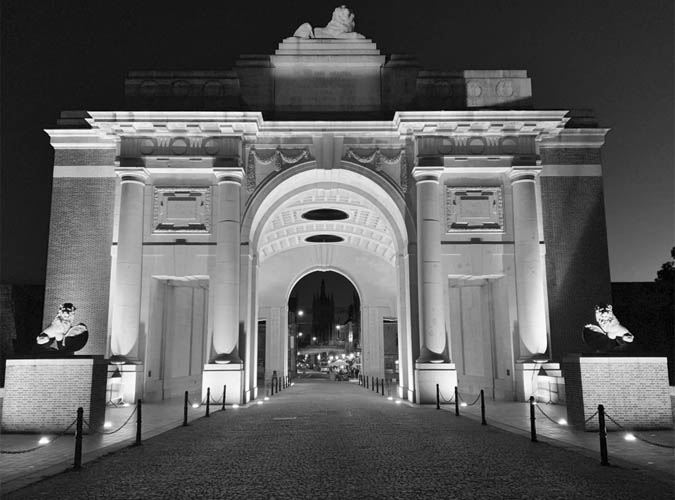
According to The Commonwealth War Graves Commission he is listed in the Roll of Honour, Panel 19, Menin Gate Memorial, Belgium. Finally, I have discovered his place of burial (Daddy, I don't think knew?) and though I'm so sad, I seek comfort that he is laid to rest among the remembered. As soon as I'm better in health, I wish to visit him. If I recall correctly, on one visit to lovely Edinburgh Castle (my "home town"), proudly Mummy showed his name, listed on the memorial in The Scottish National War Memorial, in Edinburgh Castle. I have eventually found his name, in their online Roll of Honour for Scots database as W. Ward = Service number: 7633 and also have found him on everyoneremembered.org.
The 1914-1915 Star was a bronze medal was awarded to all who served in any theatre of war outside the UK between 5 August 1914 and 31 December 1915, except those eligible for the 1914 Star. It has been estimated that 2.4 million 1914-15 Stars were issued, Source: The Imperial War Museum. Though I proudly have all Daddy's medals, I sadly don't have my grandfather's 1914-1915 Star.
Oops, I may have got dates / things wrong as I was trying to decipher Daddy's notes and his Army Records (handwritten and with loads of unfamiliar acronyms and abbreviations). Definitely WWII affected him and he, like so many other brave soldiers, did not wish to discuss his WWII experiences e.g. killing someone, even if it was your "legitimate" enemy and, seeing countless dead bodies of your enemies and "innocents". And I hugely regret, in my silly youthfulness did gently ask him (and German, Mummy). For WWII, it's now, almost sadly too late. All those who lived during WWII (or in any war), have important historical experiences and with their passing, is lost. Moreover, perhaps in later years, discussing their experiences may have slightly therapeutically helped them?
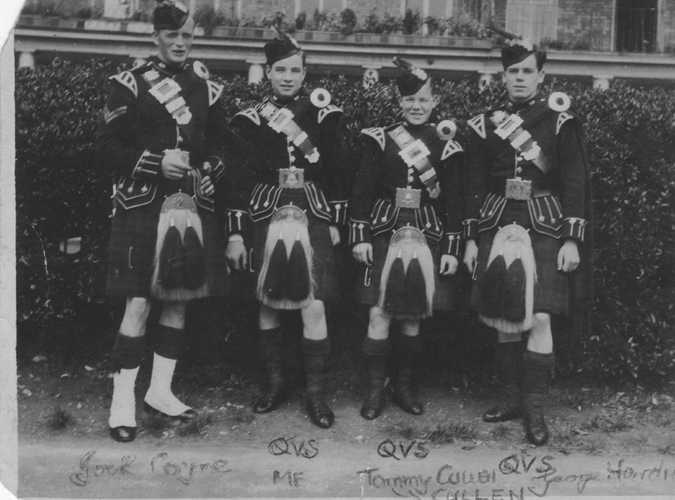
Queen Victoria Military School photo, circa 1930
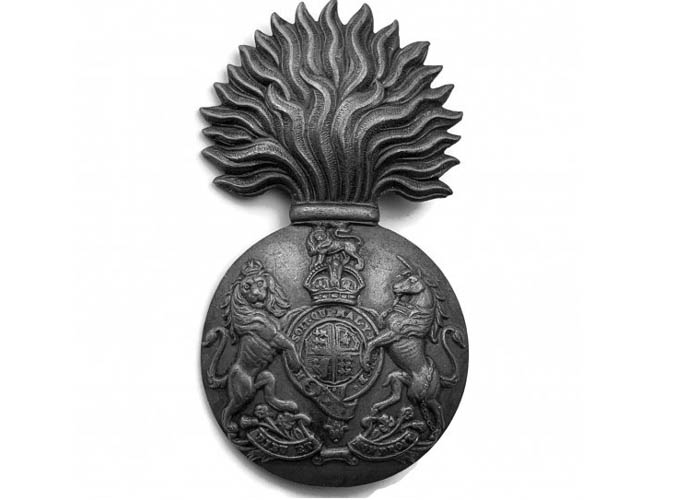
Queen Victoria Military School - was built in 1908 through subscriptions from serving personnel and other interested parties and was created in memory of those who had died in the South African wars of the late 19th Century. It provided stability and continuity of education, for example like my Father, for the children of UK Armed Forces personnel who are Scottish, have served in Scotland, or are part of a Scottish regiment. Daddy's Father, Private William Wright Ward, died in WWI serving with The Royal Scots Fusiliers when Daddy was circa 3 months old. Queen Victoria Military School was Daddy's escape from his ancestors' labouring professions. Daddy was always hugely grateful and proud of his education at Queen Victoria Military School.
The Royal Scots Fusiliers | The 15th Scottish Reconnaissance Regiment | Nettelkamp Battle |
The Royal Scots Fusiliers (return) | The Royal Highland Fusiliers
The Royal Scots Fusiliers was a line infantry regiment of the British Army that existed from 1678 until 1959 when it was amalgamated with the Highland Light Infantry (City of Glasgow Regiment) to form the Royal Highland Fusiliers (Princess Margaret's Own Glasgow and Ayrshire Regiment).
Daddy's Father, William Wright Ward, was "Killed in Action" 16 June 1915 YPRES serving under The 3rd (Special Reserve) Battalion of The Royal Scots Fusiliers as a Private.
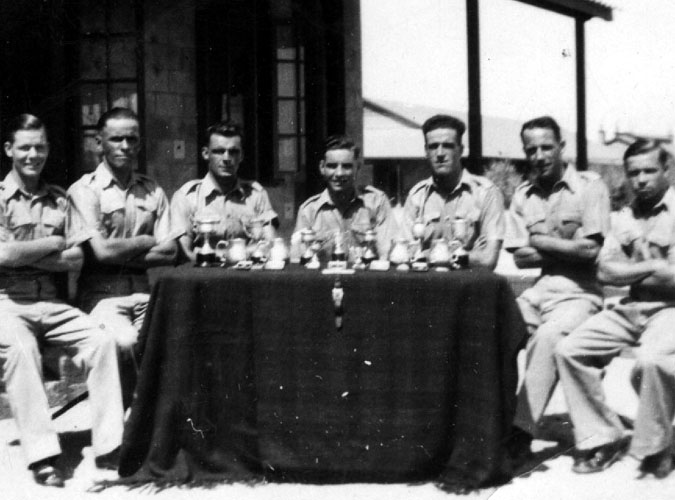
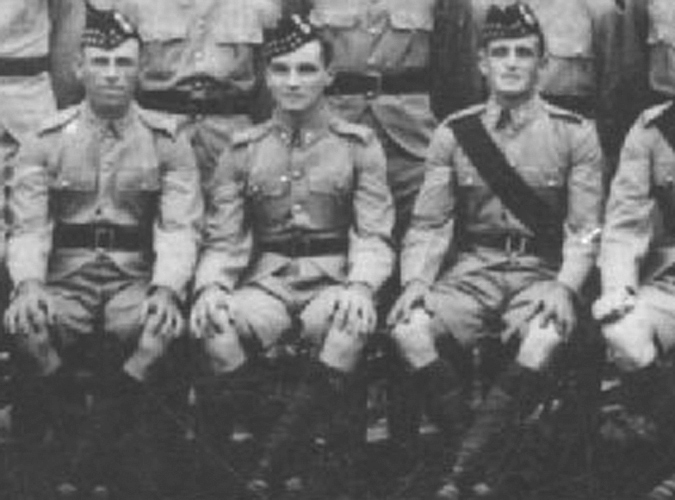
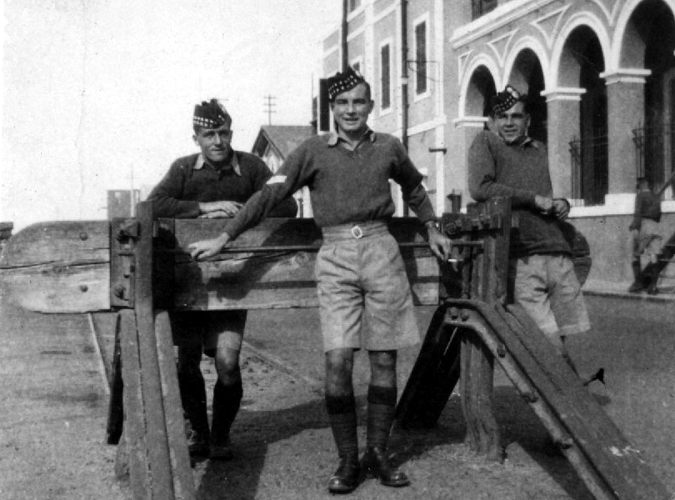
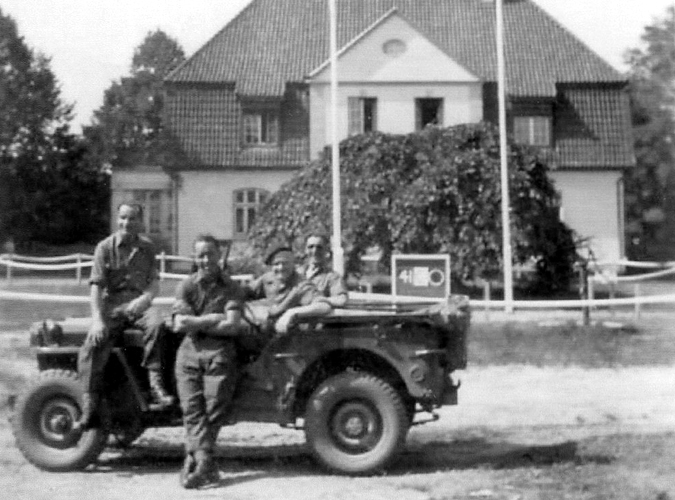
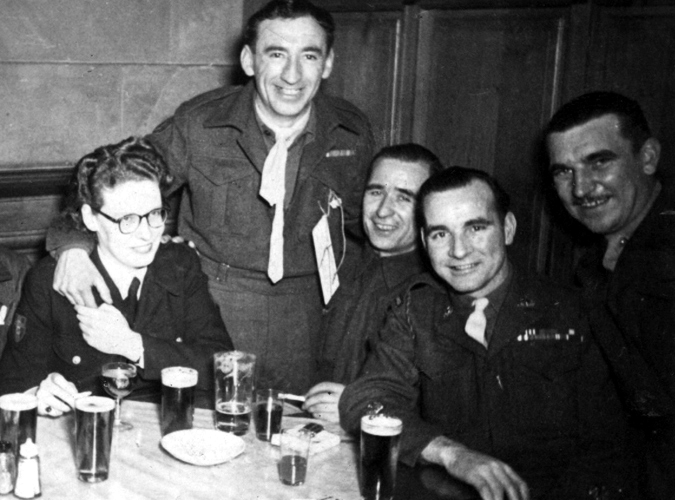
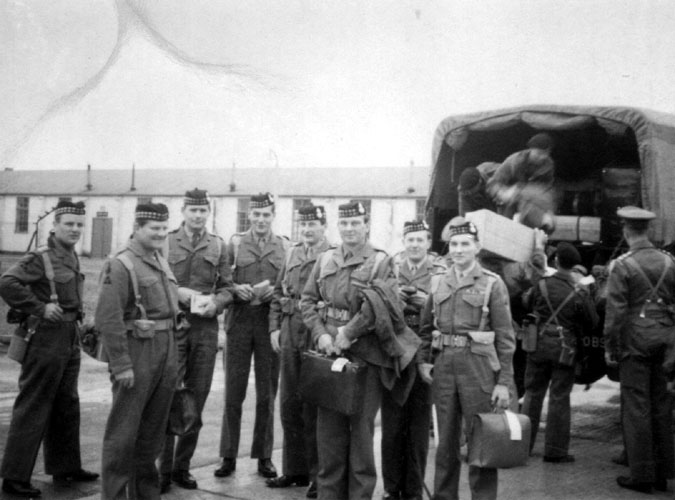
Royal Scots Fusiliers photos: Albert Ward serving with The Royal Scots Fusiliers (he's the dashing chap, furthest to the right).
Under a League of Nations Mandate, in 1920, Britain assumed responsibility for Palestine which had been previously part of Ottoman Syria. Over the next two decades, though Mandatory Palestine had a majority Arab population, more than 100,000 Jews entered the country. During this period, The British Army's operations in Palestine were mainly directed against militant Arab groups who were opposed to this mass Jewish immigration and, which was costing hundreds of lives. In his later years, Daddy would often sigh with heart-felt sadness, hearing news about the ongoing troubles and deaths in Palestine (regardless if they were Jewish or Arabic conflict deaths).
Though Egypt gained independence in 1922, British Forces remained in Egypt to defend the Suez Canal. The Suez Canal crucially provided Britain with a shorter sea route to its "Empire" and, as oil grew in importance, it provided a short sea route to the oilfields of the Persian Gulf.
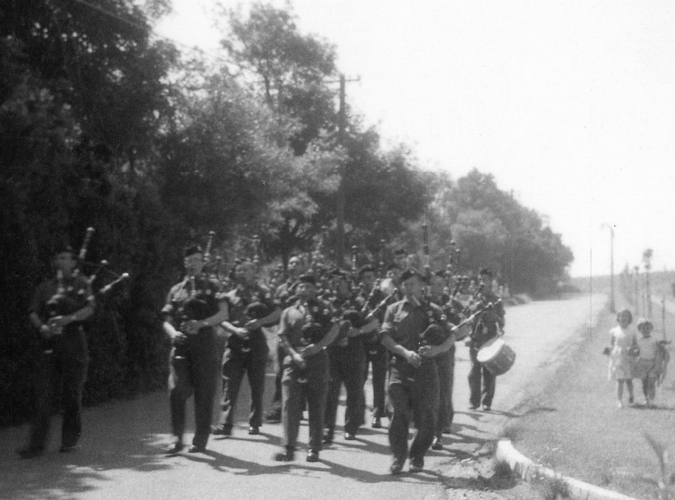
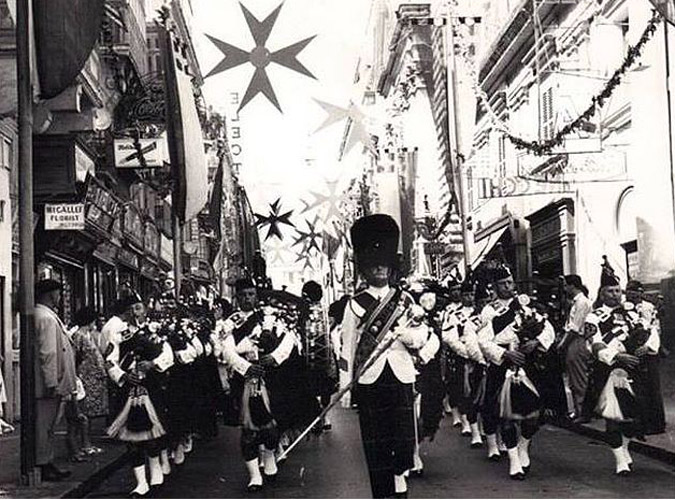
He had learnt to play the Bagpipes at Queen Victoria Military School, Dunblane and proudly told me he had played his Bagpipes at Edinburgh Castle - I assume at a ceremony, as the Royal Edinburgh Military Tattoo as that was established in 1950. At home, he had a chanter and ... I did try to learn it! But he was way too professional and REALY strict! He kept telling me off for me rounding my fingers around the finger holes (like a recorder player) and not keeping my fingers straight. Foolishly deterred after lesson ... three, I gave up :(
After the Battle of Plassey, the British East India Company established control over large parts of India. Following the 1857 Indian Rebellion, the British government took direct control of India. The British Army operated separately but closely with the Indian Army (governed by Britain). It's focus was on internal security and North-West Frontier defence. India gained Independence on August 15, 1947, resulting in the partition of the subcontinent which led to a shameful humanitarian catastrophe.
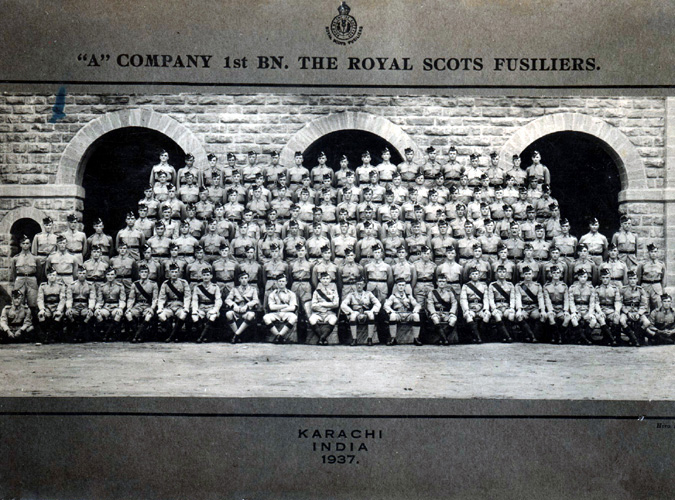
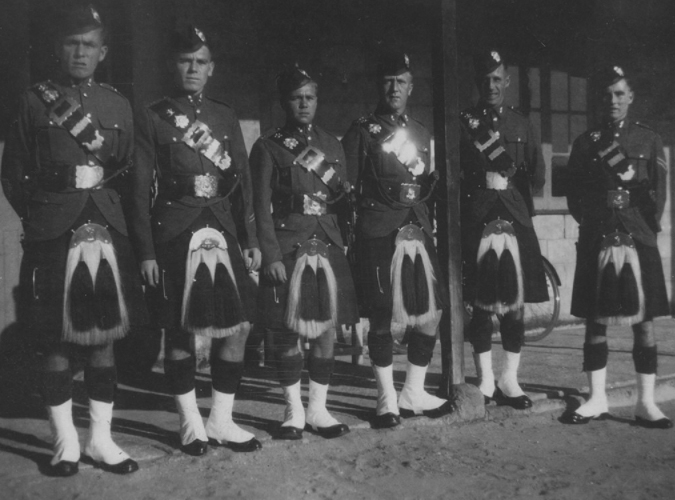
Royal Scots Fusiliers photos: The 1st Battalion, Royal Scots Fusiliers 1937 Karachi, India
From 1939 to June 1944 when Daddy landed in NORMANDY, Arromanches beaches, it's really hard to decipher his Army records as also, some information has been redacted / blocked out. So a very sketchy timeline:
What was the role of The 15th Scottish Reconnaissance Regiment in WWII? From The Normandy landings in June 1944, The 15th Scottish Reconnaissance Regiment (Royal Armoured Corps) performed a valuable role in determining enemy dispositions, and ascertaining their strength and weakness. From Joe Brown on the role of The 15th Scottish Reconnaissance Regiment in WWII: "The enemies weaknesses would be exploited by The 15th Scottish Reconnaissance Regiment by attacking at these points. Strong positions could be neutralised by fire power and/or by-passed and attacked from the flanks or rear."
The 15th Scottish Reconnaissance Regiment's objectives would be decided by the General Commanding the Division and his General Staff Officer 1 (Ops) and the Unit would report back to them. The intelligence gained by The 15th Scottish Reconnaissance Regiment would help shape the tactical deployment of the Division and the subsequent orders given to the three Infantry Brigades each having three infantry battalions ready to attack the enemy."
? - 1945 - Daddy, Albert Ward, served with The 15th Scottish Reconnaissance Regiment Squadron C, as a WO1 (Warrant Officer 1st Class) Squadron Sergeant Major (3126699) in: Normandy, France , Belgium, Holland, Germany, Denmark, Germany (Bielefeld, Hamburg, Celle). Sources: WWII War diaries for the The 15th Scottish Reconnaissance Regiment and "Scottish Lion on Patrol: 15th Scottish Reconnaissance Regiment" by T. Chamberlin, M.R. Riesco & W. Kemsley
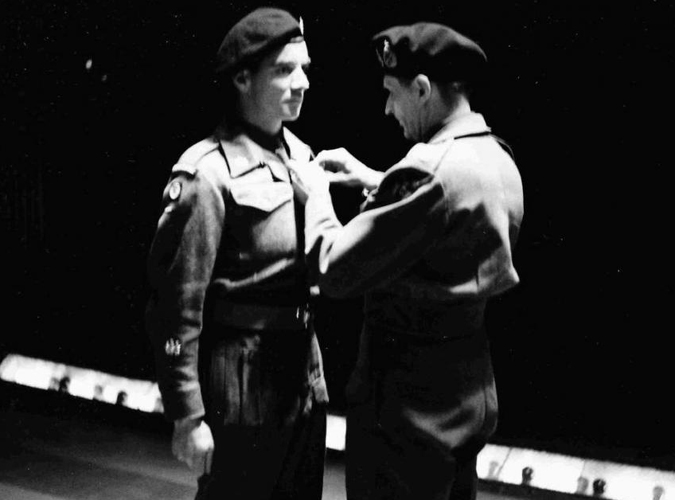
Daddy: RSM [W.0.1] A.Ward 15[S] Recce Regt. receiving his Military Medal from (his hero) Field Marshal Montgomery. Source
The 15th Scottish Reconnaissance Regiment C Squadron's route (sorry if I have some errors)
EngagementsAll Serials disembarked on the beaches at Arromanches (near Arromanches les Bains / Nan section of Juno beach?) and moved forthwith to a Transit Area (ST-GABRIEL?).
Early that morning, immediately on arrival, 15th Scottish Reconnaissance Regiment C Sqn was ordered forward to come under command of 44 Bde to fill a gap on the Corps boundary (30/8 Corps) between 15 (S) and 49 Divs, acting more in the role of an Inf Coy than a Recce Sqn, taking up positions about 1 mile south of le HAUT DU BOSQ [filling a gap at le HAUT DU BOSQ between VIII and XXX Corps]. This position was in very thickly wooded country where vehs were of little or no value.
? Field fire was not more than two hundred yards. Shortly after midnight the positions were heavily bombed. C Sqn suffered: 1 killed, 1 fatally wounded and 5 wounded. Germans then counter-attacked to the south.
At about 1335 hrs, R.H.Q. was shelled (25 shells of 10.5 c.m.) this being the first taste of battle which the Regt had had.
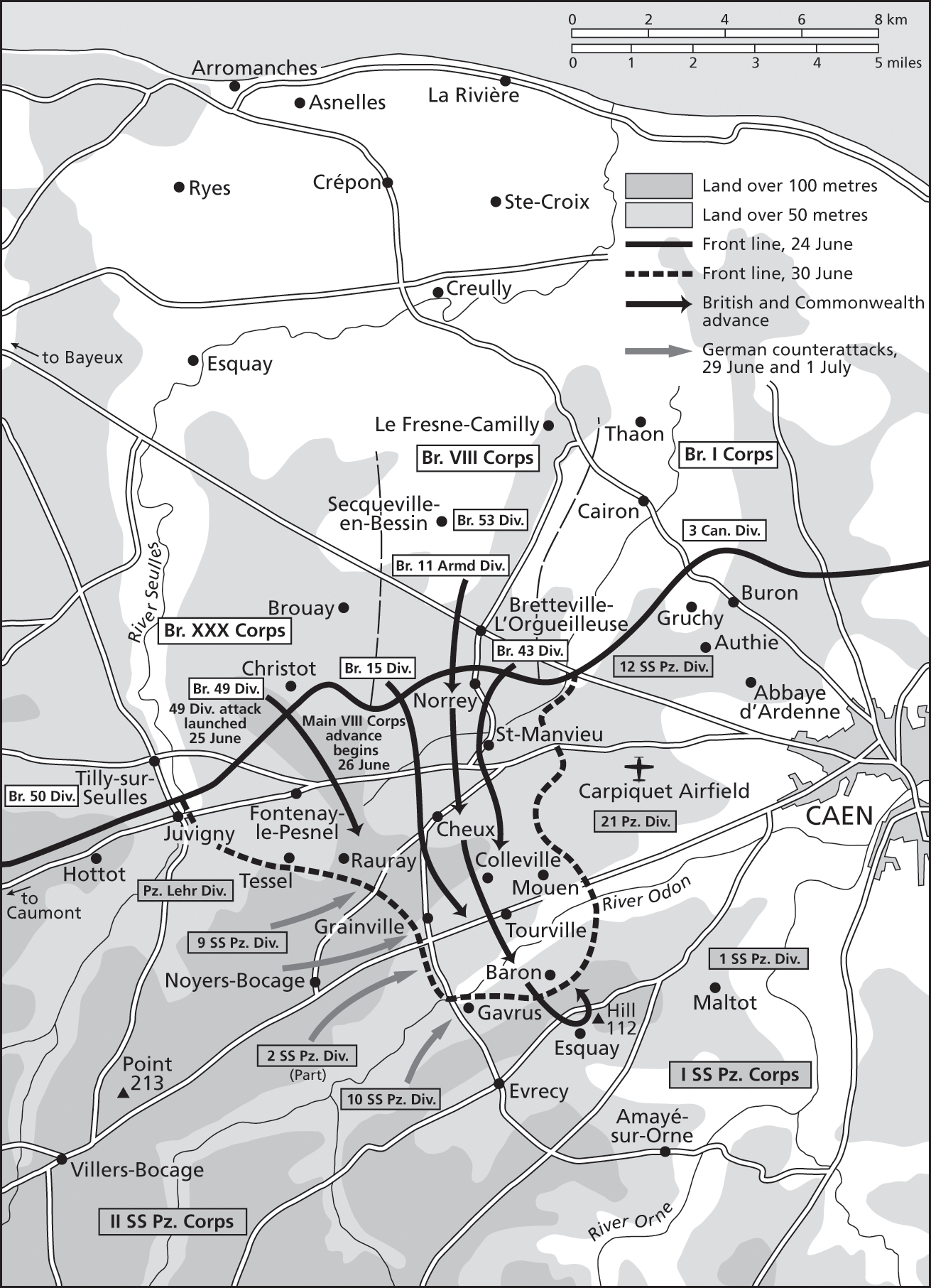
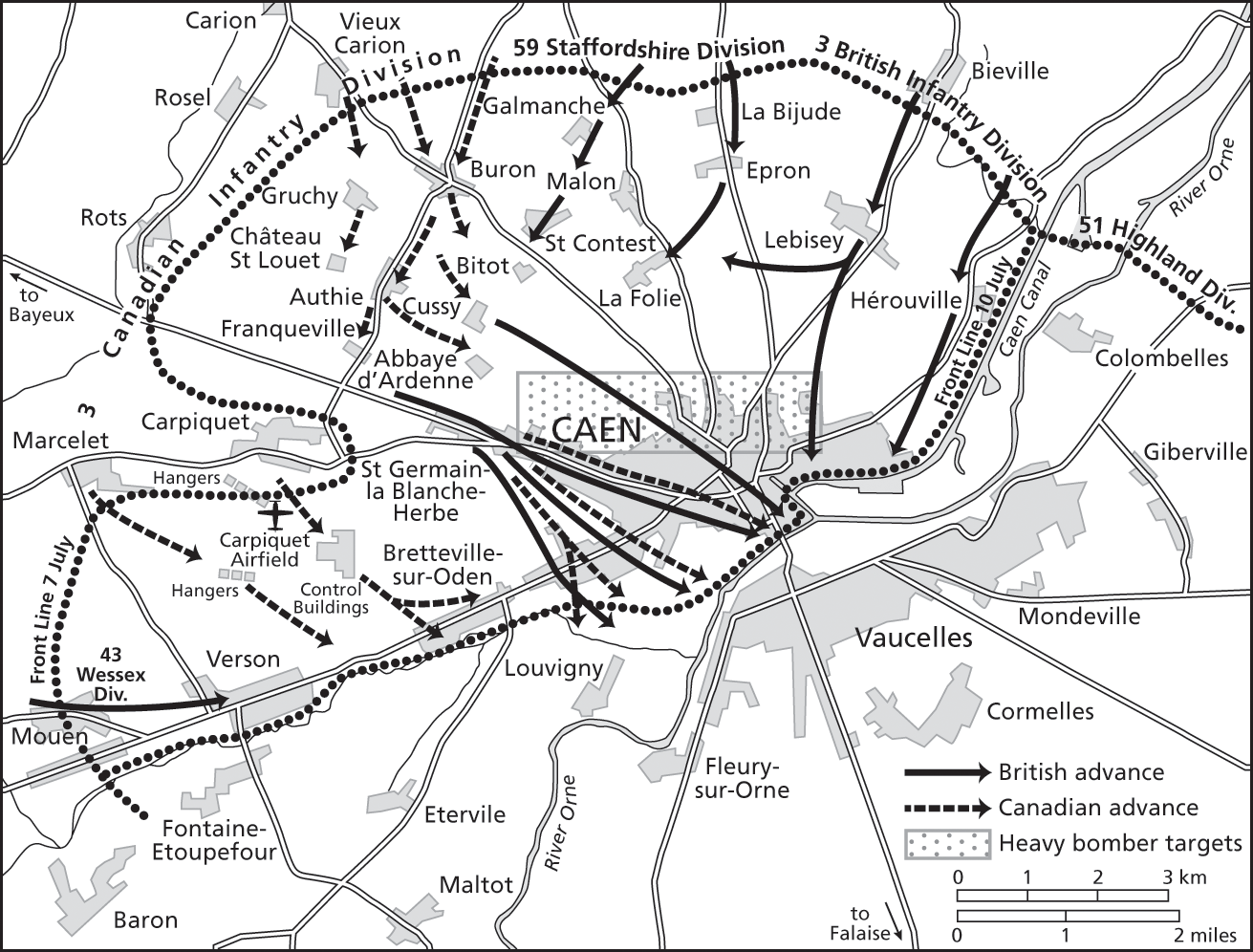
They were to exploit success down to AUNAY SUR ORNE. This attack took place late in the evening and failed to achieve any success, though C Sqn moved forward at first light and waited at BARON whilst a further attack was being laid on.
This cancelled the 15th Scottish Reconnaissance Regiment taking over BRIQUESSARD WOOD where complete recces had been done down to Tp Comdrs.
The aim of Operation BLUECOAT was to upset the enemy’s defenses: the Germans having particularly settled in the Normandy bocage and buried hundreds of mines to prohibit access to the key points of the terrain. 'A' & 'B' Sqns were to move with the Regiments of 6 Gds Tank Bde who were to exploit forward as quickly as possible to take full advantage of attacks by heavy and medium bombers. C Sqn to be ready to pass through on the right flank and "attack" ST MARTIN DES BESACES.

A major attack was staged by 11 Armd Div at ST MARTIN DE BESACES, which was not cleared until about 1500 hrs, when infm was received that the Gds Armd Div would have complete priority on roads the next day in order that they might pass through to gain the high ground at LE BENY BOCAGE. C Sqn, therefore returned to a harbour just north of ST MARTIN DE BESACES.
Operation Estry was designed to protect the flank of the Guards Armoured Division, the 4th (Tank) Battalion attacked near Estry in the BOCAGE and follow up an enemy withdrawal from ESTRY
Progress was very slow owing to other traffic and the enemy vehicles demolished on the road. Forward Sqns reached the line LE SAP - BRENAI that night.
No contact was made but considerable reconnaissance had to be done in order to find crossing places over the many streams and rivers where the bridges had been well demolished by the Germans. The 15th Scottish Reconnaissance Regiment reached the line of LE NEURBOURG - BARQUET.
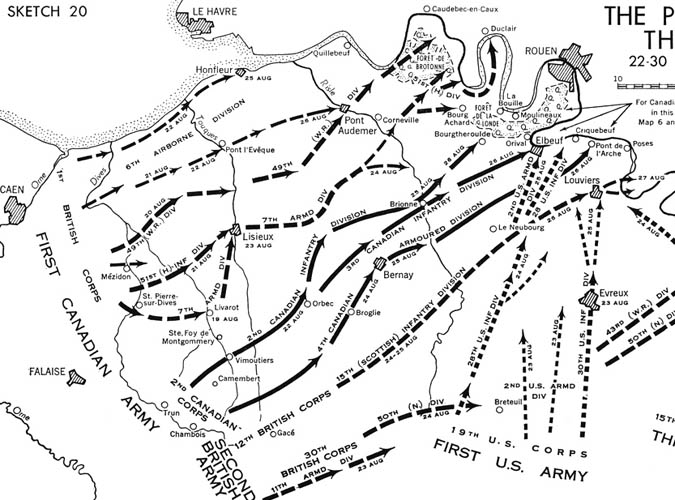
Very useful work had been done by the patrols of the Regiment, particularly C Sqn, on these two days and they were largely responsible for the early crossing of the R. SEINE. [C Sqn continued its reconnaissance, and extended it to the opposite bank of the river SEINE and to the island opposite MUIDS. A small patrol became the first men in the division to cross the Seine when they rowed to HERQUEVILLE after finding s boat at PORTEJOIE].
These patrols, acting very boldly, reached a considerable way inland and were able to give very valuable information regarding the small posts of the enemy to the infantry, who were able to achieve their objectives without any difficulty.
As soon as the bridges were built - Class 9 at MUIDS and Class 40 at St PIERRE, the remainder of 'A' & 'B' Sqns were to cross the river and continue to patrol actively eastwards. These patrols produced a very great amount of valuable information this day. Serious opposition was met on the right by 'A' Sqn at LE THUIT, FRETTEVILLE and LES ANDELYS, whilst 'D' Sqn also on the left ran into various enemy pockets.
C Sqn were released at mid-day when it was clear that a breakthrough was possible and moved between 'A' & 'B' Sqns to get as far as SAUSSY (Saussay-la-Campagne?) where they came up against strong enemy posts and made contact with the left flank of 11 Armd Div, who were starting their run which took them to BRUSSELS. RHQ moved up to LE LANDE. That night we were informed, much to our disgust, that 53 Div were to pass through 15 (S) Div next day and that we were to clear the roads for them.

C' Sqns recced out AVELGHEM (9750). 'A' & C Sqns operated during the day and reached the general line COURTRAI - WAERGHEM - CRUYSHAUTEN. Pockets of enemy were encountered but no definite movement was discernible as the enemy appeared to be very disorganised and moving in all directions. [C Sqn reached the canal beyond ZWEVEGHEM and met opposition. After the war Major Mills returned to AVELGHEM at the invitation of the burgermeister and opened an avenue named Liberation Avenue in honour of C Squadron, The 15th Scottish Reconnaissance Regiment.]
Regtl locations as under:
R.H.Q. - BELLEGHEM (Bellegem?)(8751)
'A' Sqn - KIRKHOVE (0152)
'B' Sqn - BELLEGHEM (8751)
15th Scottish Reconnaissance Regiment C Sqn - AVELGHEM (9750)
During the night a fairly stiff attack was put in on the KIRKHOVE Br and 'A' Sqn spent a restless night. The attack was driven off and from the questioning of PW it would appear that a large party of enemy, about 2,000 strong, had attempted to cross the ESCAUT Canal to get home to the "Fatherland". They were unable to do so.
They operated in that area during the day and had a fairly successful day, capturing VICHTE themselves (!) and some 18 to 20 prisoners, and killing a fairly large number of enemy and shooting up a number of soft vehicles. [The Regiment had the task of clearing from the line of the COURTARI-BOSSUYT canal northward to the main OLSENE-OUDENARDE road. C Sqn, on "B" sqn's right, found British soldiers who had been taken along as prisoners in the German retreat. "B" sqn headquarters became worried by the slowness of the advance, which was caused by hundreds of Germans coming to surrender]. The 15th Scottish Reconnaissance Regiment concentrated in OYCKE in the evening.
Information was extremely scanty, especially with regard to 30 Corps on our right and the position on the ALBERT Canal. The Regt was to send patrols into this area next day to obtain all available information. 'A' Sqn was to do this job with Armoured Cars. C Sqn were to be prepared to provide 2 Officer patrols if required. [The German's had established a "waiting" camp (Auffangslager)/ an old fortress into a torture chamber in BREENDONK. Then it contained guards who had not managed to escape, and collaborators.
Locations:
RHQ & 'A' Ech - VOORST 103791
'A' Sqn - 105793
'B' Sqn - 107791
15th Scottish Reconnaissance Regiment C Sqn - 105791
The Regtl tasks were as under:
C Sqn to recce the area of the ALBERT Canal Bank from incl 121823 to the Class I Br
'B' Sqn to similarly recce from incl KAPEL 0286 to the inter-Div Bdy
'A' Sqn - maintenance
The Div Comd wanted the area between MOLL and GHEEL (Geel?) to be combed and the Canal searched for any likely bridging sites. C Sqn was allotted this task at about 1400 hrs and reported that a certain amount of opposition was met on both sides of the canal although all the Brs were blown. All Sqns concentrated at dusk.
Locations:
RHQ, 'B' Sqn, 'A' Echelon - 152858
'C' & 'A' Sqns - MEERHOUT
[On the night of 15th September - a patrol of C Sqn led the way for the 2nd Gordon Highlanders, who tried to cross the canal 2 miles west of the DONCK bridge in order to draw of the pressure by the Herman Goring troops on the bridgehead but being pinned down, the attempt failed, . On the 17th September - The Assault Tp of 'A' Sqn was placed under command of C Sqn to assist them. Higher authority were very worried about this area and a composite force - 6 Royal Scots, 'C' Coy 1 Mx (MGs), Pl 'D' Coy 1 Mx (Mortars) with considerable arty support was put under comd of the C.O. The enemy was fairly active in patrolling during the late afternoon of the 18th they captured 2 men from C Sqn.
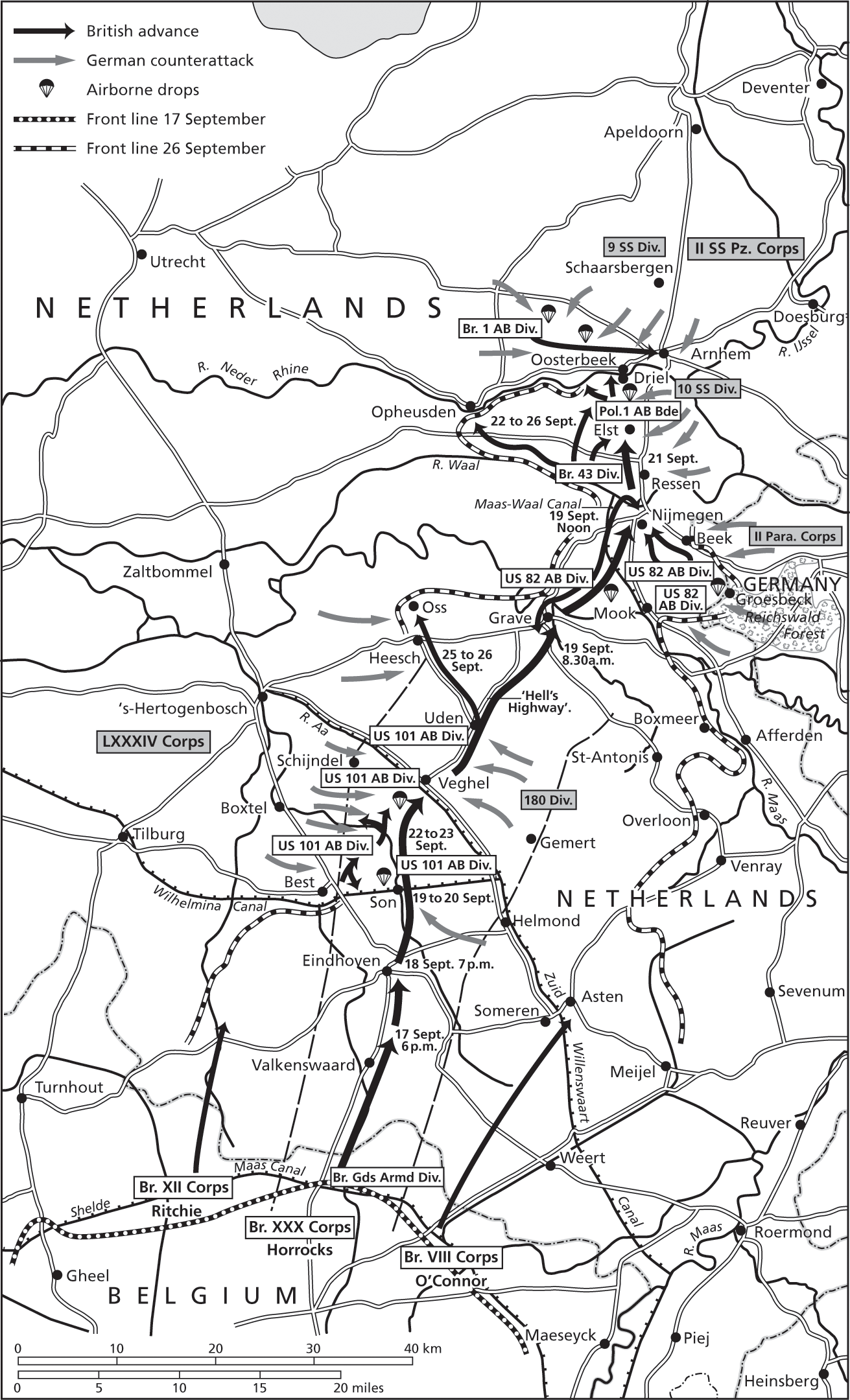
C Sqn sent out Officer patrols to the line of the WILHELMINA Canal to contact U.S. Forces in the area of EINDHOVEN and SON (ZON). C Sqn recced the brs SOUTH of BEST and OIRSCHOT. They contacted the 502 Parachute Inf Regt, U.S. Army, in the SON (ZON) and EINDHOVEN areas and tied up with them. [Reconnoitered bridging sites south of OIRSCHOT and BEST].
The next orders were to return to the BEST-ST Oedenrode line as part of 227 Brigade Group, which was to relieve 2 brigades of the Highland Division and the 2nd Derbyshire Yeomanry. This was part of the redistribution of XII Corps formations for Operation Pheasant (also known as the Liberation of North Brabant) which was a major operation to clear German troops from the province of North Brabant in the Netherlands, from the western edge of the Nijmegan salient and out of s'Hertogenbosch and Tilburg.]
[C Sqn had returned to its old positions, occuping an area called "The Box" which was so close to the Germans that they could hear the Germans coughing and was often under fire.]
Locations as under (Ref HOLLAND Sh 18NW, 18 SW, 1/25,000):
R.H.Q. - X Track 389284
'A' Sqn - Area STEENEEG - X Tracks 372278
'B' Sqn - took over the area which was held before by 2 A & SH, nicknamed the "Box" (382293). These posns were within 100 yards of the enemy FDLs
15th Scottish Reconnaissance Regiment C Sqn - area of LE VLEUT
Sometimes The Regt was too thin on the ground to provide any patrols. In the morning pf 20th 'B' Sqn had trouble; a mortar stonk killing one OR and wounding 6 others, all from the same Assault Section. Sporadic shelling, mortar and arty fire during the days, mostly in the area of the BEST Br and X Rds.
C Sqn moved up NORTH through 'B' Sqn and at the same time moved a patrol on the RIGHT flank so as to try and have a look at LIEMPDE from the EAST. C Sqn was soon held up by the bad going, and a number of mines and Rd blocks across the tracks in the woods. C Sqn, as they could not get on, were ordered to concentrate at VLEUT. C Sqn remained in the LE VEULT area with orders to be ready to patrol with one Tp along the line of the WILHELMINA Canal on the front of 44 Bde so as to approach TILBURG from the SOUTH. The main problems were Rd blocks, which were mined and booby-trapped, and the tracks, some of which were almost impassable while others were mined.
Every effort was made to by-pass, but by 1200 hrs it was found no further progress could be made and the patrol withdrawn. Locations:
'A' & C Sqns, R.H.Q. - LE VEULT Area
'B' Sqn - MOERGESTEL.
C Sqn were ordered to carry out Offr patrols SOUTH of the WILHELMINA Canal, crossing the BIEST Br, with the job of contacting 4 Armd Bde and carrying out a full route recce of the rds in the area. Owing to traffic congestion these patrols did not get across the BIEST Br before approx 1400 hrs, thus being left with very little daylight to complete their recce. However, some very valuable infm was obtained. 'A' Sqn was moved into OIRSCHOT during the afternoon, and it was decided as C Sqn might be required to carry out further recces, to move them to the area BIEST and their location at OIRSCHOT allotted to the Tps of 'B' Sqn who had been turned out by 227 Bde HQ.
Locations were as under:
R.H.Q. - OIRSCHOT. 'A' Sqn - OIRSCHOT
15th Scottish Reconnaissance Regiment C Sqn Area of BIEST
'B' Sqn - Sqn HQ and 1 Tp at OIRSCHOT; remainder at MOERGESTEL
As very little was known about the enemy, active patrolling was ordered. C Sqn managed to gain very valuable infm both of the enemy and of the ground, and in particular Lieut MORRIS put up a very good performance on the RIGHT of the Glasgow Highlanders where he greatly assisted in breaking up a very nasty German counter-attack. C Sqn limited patrols on 227 Bde front.
Locations for the night:
R.H.Q. - ZOMEREN 598107
'A' Sqn - OMMEL 6115
'B' Sqn - ZOMEREN 605086
15th Scottish Reconnaissance Regiment C Sqn - HEUSDEN 6212
Locations : RHQ ZOMEREN (Holland Sh 26 NE 1/25,000, MR 598107)
'A' Sqn Concentrated for night OMMEL 6115
'B' Sqn School NIEWWE PAROCHIE
15th Scottish Reconnaissance Regiment C Sqn HEUSDEN 6212
[The Division, the right flank of VIII Corps, was given two routes east from the Deurne Canal. One, called Skye, ran from MEIJEL through BERINGE to SEVENUM, and was 227 Brigade's; The second, called Ayr, ran from LIESEL to SEVENUM through HELENAVEEN and was 46 Brigade's.]
One of their tps was to be ready to move in the morning under comd of B Sqn over the Canal de DEURNE. The whole of the MEIJEL area was very heavily mined and C Sqn lost two vehs whilst moving into a fwd post where they were to relieve the RSF to enable the Inf to be in posn to follow B Sqn in the morning. No personnel cas. Regt task: C Sqn to move over the Canal as soon as practicable after B Sqn and harbour as a Regt res in the BERINGE area.
By night they had reached BROEK (8011) on the outskirts of VOORSTE STEEG. They made contact in BROEK with SP guns and in the general area they found a fair number of mines. The bridge on the outskirts of VOORSTE STEEG was found to be blown. The proposed Div axis (SKYE route) was fast becoming a quagmire. A Sqn got over the canal at HELENAVEEN at midday and obtained much useful infm regarding the approaches to SEVENUM from the WEST. They encountered one A.Tk gun but again their main difficulties were mines and the bad going on the tracks. This Sqn was withdrawn by 46 Bde to their old area of LIESEL for the night. C Sqn were ordered to remain in the area of BROEK in the open for the night as the rds were so bad that it was not practicable to return to BERINGEN. The main infm of the day was of only slight resistance but mines, craters, and mud in plenty.
By 1000 hrs they were in SEVENUM and reported the town clear apart from demolitions (the Church steeple blown across the rd) and general mining of all the exits from the town towards the R. MAAS. By midday they had reached the rly crossing N of the town at 819157 and reported craters and slight enemy opposition from the area of the rly stn. This was successfully dealt with. At 1200 hrs Div ordered a patrol to investigate HORST (8318) and HEGELSOM. By 1600 hrs the Sqn had completed this and reported both towns clear. A grand day by C Sqn of quick adv, but of mines, demolitions and again, only slight enemy opposition. HQ were established BERINGEN (754058).
First, to report on the village of KASTENRAIJ.
Secondly, TENRAIJ.
Thirdly, BROCK
Fourthly the Woods just S of BROCK.
Despite very hy mining especially on the northern exits of HORST, and demolitions and rd blocks, C Sqn reported the first priority, KASTENRAIJ, clear by 1215 hrs. This enabled the inf of the 3 Div to march down the rd and occupy this village. The third and fourth priorities of BROCK and the woods to the south, were reported clear by 1100 hrs, and on the second priority TENRAIJ they made contact at 1500 hrs with MGs dug-in along the line of the rly. This patrol carried out foot recce about 500 yards from the village itself and reported all that was necessary to Div by 1500 hrs, namely that the village was held; and reported the pinpoints of several enemy posns. Another very good day by C Sqn, who had obtained a vast amount of extraordinarily accurate infm, especially regarding mines, craters, rd blocks, and demolitions.
Patrols progressed well despite hy mining and demolitions and without any assistance from sappers or of scissors tk-br, both of which were requested. They made contact about 1,500 yds from TENRAIJ itself which disclosed that the enemy had seeped fwd standing patrols about 1,000 yds during the night. By 1400 hrs the Corps Comd told the Regt that C Sqn patrols could withdraw as they had got all the infm he desired. Patrols withdrew having done another very good job.
Our own inf took over in TENRAIJ and the towns of HORST and SEVENUM pushing up behind C Sqn along the line of the rly running into BLERICK. The MAAS pocket has shrunk considerably during the last few days largely due to C Sqn who have done terrific work and is now only a small strip along the river bank with pockets in the riverside villages and in the town of BLERICK which is the western suburb of VENLO. Plan for tomorrow. C Sqn in front of 227 Bde to recce the villages of WANSSUM - BLITTERWIJK - BROEK HUIZENVORST. RHQ moved up to VOORST STEEG (805128) and HQ established there.
Locns:
RHQ - VOORST STEEG
A & 15th Scottish Reconnaissance Regiment C Sqns - HORST
B Sqn - ULFERHOEK > S of GRUBBENVORST
The 15th Scottish Reconnaissance Regiment is running the Control layout which was worked out on Exercise "BLACKCOCK" in ENGLAND last year. There are to be 6 lanes, one for wheels, one for tracks, and one spare on each of the two main routes fwd, and we are having three control points on each lane, an entrance party, a mid-way party and an exit party. Officers are to be in charge of the entrance and exit parties on each lane and Sqn HQ are to be Regulating HQ. It was represented that to enable this task to be carried out satisfactorily, better protection than an Armd Car or Carrier would be required. Four Churchill Tanks were therefore lent to us, much against the wishes of the Tk Bn Comd concerned.
locations as under:
'A' Sqn - 834182
'B' Sqn - 824153
15th Scottish Reconnaissance Regiment C Sqn - 869133
RHQ - 573156
Over the last 7 days there has been a certain amount of enemy patrol activity on our front. The Sqn ('A'?) is, in fact, holding the line opposite two of the seven most likely crossing places on the Div front. During the night of 21st one of their posts was ambushed by a fairly strong enemy patrol and 9 ORs reported missing. The post ambushed were in houses and would appear to have been taken more or less by surprise.
Squadron HQ were in the crypt of what remained of the church.
1945
15th Scottish Reconnaissance Regiment photo - Warrant Officer Albert Ward - 3rd from right
RHQ & 'A' Echelon - static and located at LIEROP 573156
'A' & C Sqns - resting in village of LIEROP
'B' Sqn under comd 44 (L) Inf Bde and in the line at HOUT BLERICK
Enemy air activity took place over the whole Div area, and, in fact, over the whole of the Western Front. No casualties or damage were suffered by the Regiment and no hits were claimed on enemy aircraft.
Locations as under (Ref BELGIUM Sheet 4, 1/100.000):
RHQ, 'A' Echelon, L.A.D (Light Aid Detachment) - BOISCHOT 923766
'B' Sqn - Chateau 934775
15th Scottish Reconnaissance Regiment C Sqn - GOOR 916748
'A' Sqn under comd 44 (L) Inf Bde in line at HOUT BLERICK.
Regiment now located as under:
RHQ, 'B' & 15th Scottish Reconnaissance Regiment C Sqns, LAD - Monastery 193306
'A' & 'B' Echelons - 199308
'A' Sqn billeted on the SOUTH edge of TILBURG in civilian billets
The whole Regiment to spend the next days in maintenance, rest, and preparing for future operations. Slight enemy activity in the way of V.1 weapons on TILBURG. No casualties suffered by the Regiment.
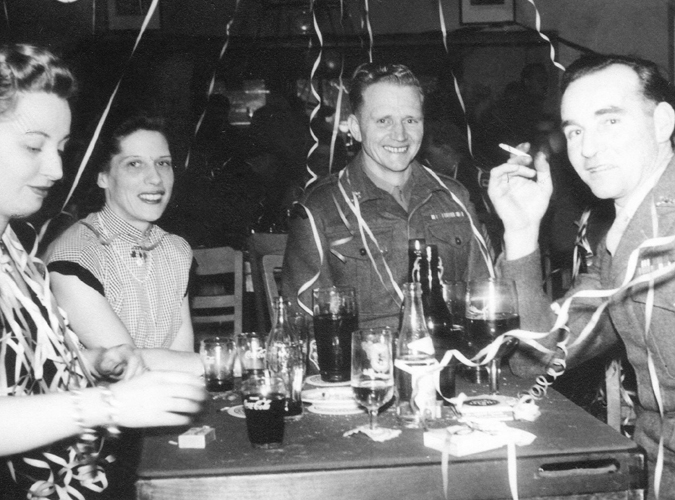
"The party was in a HELMOND cafe... it was so large that the whole sqaudron was able to sit together... everything was going with a swing, including some of the chairs... Sg Major Ward sized up the situation and decided that fresh air would be beneficial to the company, so everybody was truned out to cool down for a couple of hours before the dance, which started at seven o'clock. It was amazing, the difference those two hours made." Capt Liddell
Wow Daddy! At home hosting dinner parties - he wouldn't let guests leave saying "Just one more, for down the road" :)
RHQ, 'B' & C Sqns, LAD - Monastery, TILBURG (191305)
'A' Sqn billeted in TILBURG
'A' & 'B' Echelons - 192304
Operation Veritable started on 8 February 1945 aiming to clear the area between the Roer and Rhine rivers of German forces. Operation Veritable was intended to be one of two pincers aimed at encircling the entrenched German forces. In this scenario British and Canadian forces would constitute the northern pincer of the attack, while U.S. forces would come up from the south to close the trap (Operation Grenade).
They found that the enemy had pulled back along the whole front. Mines were located at 938534 on the outskirts of HASSELT, but these were by-passed and HASSELT reached at 1100 hrs and found to be clear. A carrier tp was left to hold HASSELT until relieved by the inf. A patrol pushed fwd, but contacted enemy inf in the wood 948531. Enemy were also encountered on the southern outskirts of ROSENDALL 9452. Very hy and accurate fire was brought down on these patrols and it was necessary for them to withdraw. A further patrol was endeavouring to make for HURSBERDEN but could get no further than Rd Junc 940557, where it came under fire from SP Guns. A patrol working northwards from HASSELT could only reach the line of the rly where it also came under fire. It was quite obvious that the enemy was still prepared to fight hard.
That night the Germans blew up a dyke in the Later Rhine, and the floods spread and deepened with this new onrush of water. C Sqn tried to find a wat round them while the infantry of 46 Brigade carried out limited operations against the strong German positions on the main road beyond Hasselt.
Considerable flooding was found both on the KLEVE - CALCAR Rd and on the KLEVE - KELLEN rd. C Sqn endeavoured to find some way round the floods keeping to the NORTH of KLEVE - CALCAR Rd as the inf were fighting SOUTH of it. They found it quite impossible; even the rly KLEVE - CALCAR was flooded to anything up to 6'. Efforts were made to test the depth of water by use of Recce boats.
Locations:
RHQ, 'B' & 15th Scottish Reconnaissance Regiment C Sqns - KLEVE
'A' Sqn - BEDBURG.
RHQ moved to [hospital buildings in] BEDBURG [just outside CLEVE on the orad to GOCH] to be close to Div HQ. 'A' Sqn were ordered to send patrols to discover the sit in GOCH and to see if there was any possibility of pushing through the town with our patrols. The fighting, however, in GOCH was still extremely hy and it was quite out of the question for any patrols to get through.
The Regt was ordered to find out the posn at the Southern end of the wood 9542, which was reported to be clear of enemy by an inf patrol. 'B' Sqn were ordered to move up from KLEVE to PFALZDORF and given the job of finding out the posn at the bottom end of this wood and to est themselves there to prevent infiltration through the wood, so giving left flank protection to our inf attacking southwards. All the tracks in the area were found to be almost impassable, having been badly churned up by the tks. A tp of carriers was pushed through the inf at BUCHOLT and soon came under considerable arty and mortar fire from UDEM. This tp pushed on and came under S.A. fire from the houses in area 958431. As a result of hy Besa fire and setting a haystack on fire they collected from these houses 30 POW, incl the crew of a Panther tank. It was clearly quite impossible to get a mounted patrol down to the bottom of the wood, and therefore it was decided to get down a dismounted party during the night. The Assault Tp of C Sqn was placed under comd 'B' Sqn. At about 0300 hrs 'B' Sqn was est at the X Tracks 957424.
At first light 'B' Sqn pushed out dismounted patrols to discover the exact posn at the bottom of the wood. These patrols soon ran into trouble, encountering mines and coming under fairly hy spandau fire. An SP gun also opened fire, bursting the rounds in the trees. C Sqn Assault Tp Leader, who was in comd of the party decided it was not on to stay at the X Tracks and withdrew his whole party back level with the inf coys in the area 951428. This wood was under very hy shell-fire all day and personnel were not properly organised for a protracted stay in slit trenches. 'A' Sqn Assault Tp was therefore placed under comd 'B' Sqn to enable reliefs to take place and troops to be rested and re-organised out of range of this hy shelling. C Sqn were moved up from KLEVE to PFALZDORF and later into GOCH, 'B' Sqn having moved across to the farm at 944445 the previous evening. [The RAF by mistake dropped bombs at night on C Sqn's harbour in the GOCH area.]
C Sqn were ordered to send out carrier patrols to give left flank protection to 44 Bde during their attack to the SOUTH. They were in posn at 1030 hrs and were relieved by inf at 1800 hrs. They were under very hy shell fire all day, losing 1 killed and 3 wounded; 5 vehs ditched or burnt out. The going was quite impossible owing to softness of the ground, which had been cut up by tks. [It was the regiment's last action in Operation Veritable. That night order were received for the relief of the Scottish Division, which was to refit and train for the CROSSING of the RHINE
Locns:
RHQ, 'A' Sqn - BEDBURG
'B' & 15th Scottish Reconnaissance Regiment C Sqns - GOCH, Germany
In the initial stages of the crossing each Sqn to supply six half-tracks for the towing of storm-boats and bridging materials. In addition six carriers were to be supplied to tpt Mil Government personnel over the RHINE. Two carriers to be supplied to RASC to act as wireless link to RASC Dump on EAST bank of RHINE. C Sqn were to supply five officer patrols to recce the immediate vicinities of the bridge-head, to be passed over the RHINE as and when the situation warranted.
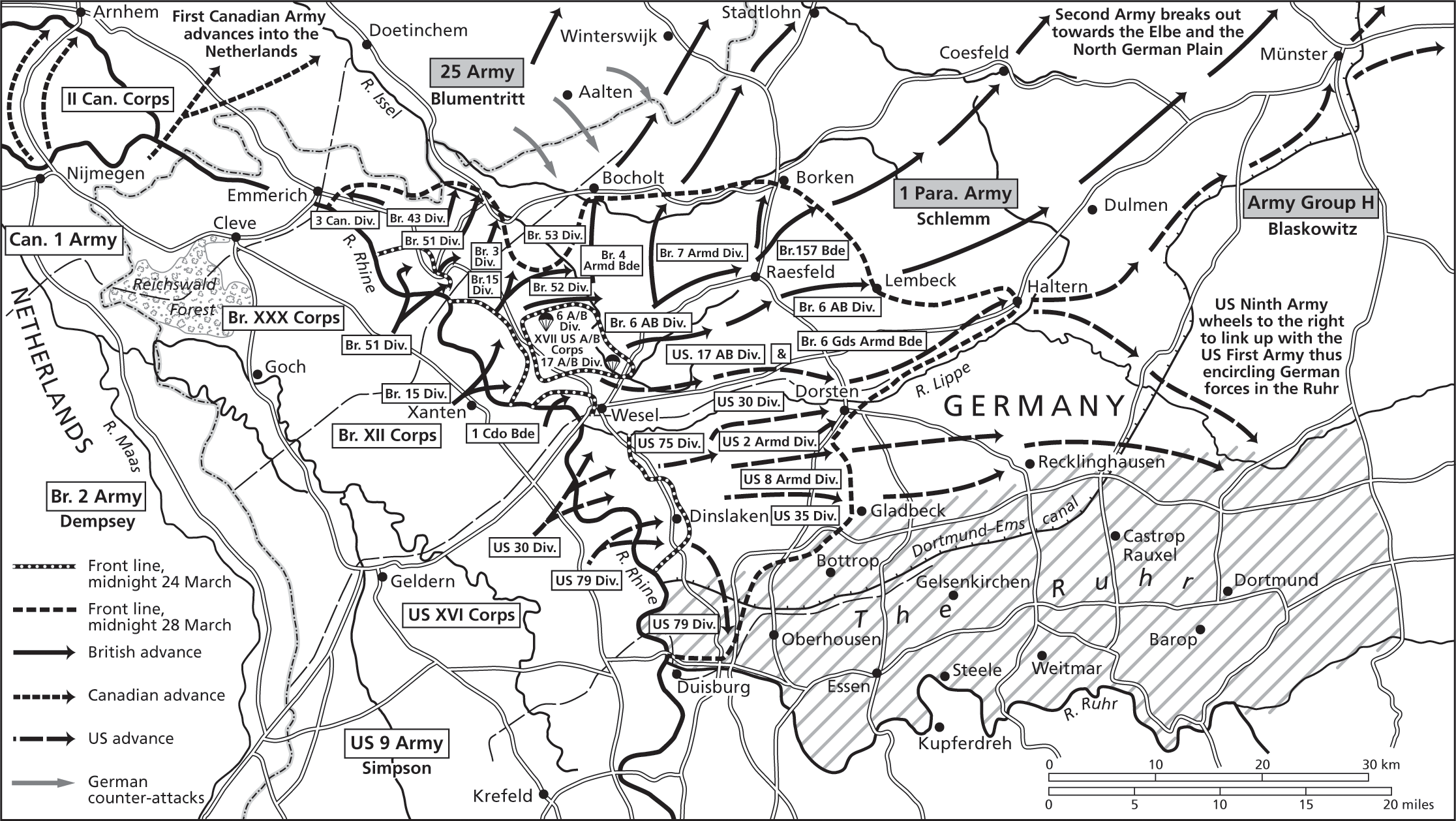
[On the night of 23 March more than 1,300 guns began to fire at the Germans on the east bank, on the XXX Corps front, the Highland Division started crossing opposie REES... On the XII Corps front, 1 Commando Brigade crossed WESEL and at 2 am the infrantry of the Scottish Division some piped ashore, opened their assualt between REES and WESEL.]
[10 am over the Rhine flew the air armada of the First Airborne Army - more than 1,700 planes and 1,300 gliders with parachutists.]
[Heavy fighting was reported on all sections of the bridghead, particulalrly in the area of HALDERN, on the buondary between XII Corps and XXX Corps.]
Regt located as under:
RHQ, 'A' Echelon, LAD - 150486
'A' & 'B' Sqns - 150486
15th Scottish Reconnaissance Regiment C Sqn & 'B' Echelon - HAMMENKELN.
[In the small town and villages, the German people stayed behind their curtains, and showed only white emblems of surrender. But there were cheers. They came from small ogroups who had been slave workeres and were now trekking west... Frenchmen, Dutchmen, Belgians...]
The original route chosen by 6 Airborne Div was a circuitous one mainly through woods and along cross-country tracks, as far as possible avoiding the main rds.
'B' Sqn
'B' Sqn moved out at approx 0500 hrs to contact elements of the Airborne B'head Tps (6 Air Landing Bde) and then they moved in a NE direction towards the town of WINDHEIM 8725. The town was held and covered by mines across the rd. The situation was a bit confused and after a certain amount of shooting to get a 'B' Echelon of the Airborne out of trouble which had gone astray, the Sqn withdrew into the B'head again.
When ROSENHAGEN had been cleared 'B' Sqn went forward, meeting little opposition until HAGENSBURG 080272, where 2 Tps got inside the village and could not get out on the far side. 12 Para Regt with its tanks cleared up the village and 'B' Sqn pushed on. The Sqn stuck to the metal rds to avoid being bogged; the Airborne Tps followed up.
On the aerodrome on the outskirts of WUNSDORF 1556, 'B' Sqn again ran into trouble. They initially shot up several Germans, but some 20-mm and rather heavier A.A. guns opened up on them. At this point the tank-borne paratroops cut straight across from this rd to a parallel rd which led up the side of the river to BORDENAY Br. There was then a mad helter-skelter for the Br at BORDENAY, and after considerable firing the leading tks and the Armd Cars crossed in a bunch. The enemy were observed pulling out at the back of the village in half a dozen lorries. A small B'head was quickly formed by the paratroops, and the charges drawn out of the Br. 'B' Sqn sent a patrol NORTH to try and take the NEUSTADT Br from the EAST, but, owing to the delay likely to be caused by clearing of BORDENAY village itself and by a certain amount of shelling of this area, the patrol was diverted to move up the Western bank. When it got approx 1 mile off the Br it was fired on. A foot patrol was sent fwd to see if the Br was blown. This patrol reported there was no indication of it being blown, but that the Br surroundings appeared held. That night 'B' Sqn harboured in the BORDENAY B'head at about 2000 hrs.
'A' Sqn
At 0700 hrs 'A' Sqn was ordered to take over WINDHEIM, and 'B' Sqn pushed out of the B'head on the Airborne main centre line in a due Easterly direction. At ROSENHAGEN, the centre patrol contacted bazookas and 50 or 60 enemy. The leading Airborne inf (12 Para Regt), tank-borne, was quickly on the scene and there was considerable shooting before the village was cleared up.
On the request of 11 Armd Div 'A' Sqn cleared WINDHEIM and the next village to the EAST, and at 1035 hrs reported the village of DOHREN 8926. At 1130 hrs they reported ROSENHARD 9223 and NEWCLICK 9126 clear, also the classification of the brs - Cl 40 at 919280 and Cl 12 at 910238. 11 Armd Div then passed though 'A' Sqn but would not move until these villages had been cleared. 'A' Sqn continued their clearing ops on the Northern flank, and cleared MUNCHENHAGEN where they spent the night.
C Sqn
At 0730 hrs C Sqn reported the village at 9120 held. C Sqn was moving up against opposition of varying strength, but mostly small arms, and an occasional bazooka. Each village had to be cleared 'A' Sqn were ordered to clear NEWKINK 985273. C Sqn's progress was slow, having no tank and inf support. There were repeated diversions because of non-existent or very bad tracks. C Sqn finally ended up with their fwd tps in the area 923283 - 922184. 3 Para Bde were ordered to move up behind C Sqn at 1500 hrs.
RHQ remained for the night in an SS Camp at 865215 [north of LAHDE and C Sqn at WIEDENSAHL. That dat the regiment had helped to shatter the WESSER line and to lessen German hopes of a stand on the LEINE.]
At about 1240 hrs C Sqn's leading elements were on the outskirts of LUTTHE, some 3 miles WEST of the RICKLINGEN Br. Civilians reported three tks carrying inf in this village. At 1315 hrs the shelling started again on the RICKLINGEN Br area, and there appeared to be movement from the wood towards the village of RICKLINGEN of an SP gun. Shortly after 'B' Sqn reported three enemy tks carrying inf and some half-tracks moving towards the village, and asked for support. By 1400 hrs C Sqn was definitely held up outside LUTTHE, and the inf and tks had taken over the job of clearing the village. C Sqn were ordered to contact AMERICAN tps who were clearing the wood 2025. C Sqn reported that owing to the Brs on the AMERICAN front all being blown the AMERICAN forces were switching NORTH and going over the RICKLINGEN Br. RHQ moved at 0700 hrs to KLEIN HEIBORNE.
'B' Sqn
At approx 14.15 hrs the enemy attacked 'B' Sqn in some strength from the EAST of RICKLINGEN with tks carrying inf and more inf in half-tracks. 'B' Sqn succeeded in shooting the majority of inf, but in spite of firing all their PIAT amn could not stop the tks, who played havoc with the vehs. The A/Tk gun was placed to face WEST as tks were known to be in LUTTHE. When the tks attacked from the EAST it was impossible to re-position the gun. This battle continued for approx 1 hr, when 3 Para Bde supported by tks appeared and the enemy withdrew, but continued to shell the area. 3 Para Bde in fact ran cross country for the last 2 miles to help us out. Total casualties suffered by 'B' Sqn were:
Personnel - 2 wounded, 4 missing
Vehicles - 7 Carriers, 3 half-tracks
To begin with the going was slow, largely owing to poor visibility caused by mist. C Sqn on the right flank had had rather the worse of the going because of poor tracks which continually petered out into fields and woods, but there was not much opposition, and AMERICANS were contacted. A Royal Tiger Tank was discovered abandoned at one point, and attempts were made by C Sqn to get this tk back to our lines, but the AMERICANS who were taking NO chances, blew it up. C Sqn, in addition to advancing EAST, had been tapping SOUTH, and their first contact was gained at the village in 3553. There was the usual crop of civilian reports and Ex PW reports of little groups of enemy lying up in the woods, but in many cases these were found to be wrong. Civilians reported that the area of UNTERLUSS was a gun testing area and there were large stocks of amn dumped there. C Sqn again reported a contact in the area just NORTH of 366305, and here a rd block was found to be manned by about 30 inf and a Q.F. gun of a light calibre. After taking 15 POW C Sqn withdrew this patrol to a position of observation, the rd block being obviously manned by a fairly determined force. The AMERICANS took over this area and C Sqn concentrated behind 'A' Sqn in the area of FUHRBERG. It was clear that opposition was light to the EAST, but that the Northern approaches to HANOVER were held.
This was the last day that the Regt was to work with 6 Airborne Div. The Regt were to continue the next day with 15 Div.
C Sqn tapped SOUTH and contacted the AMERICANS, who did not appear to be going to adv that day. They also found some enemy back in the area of the rd block 366305. They took 9 POW and handed them over to the AMERICANS. An SP or A/Tk gun was reported at 577382. This was reported to be one of the pair which had been causing trouble to 'B' Sqn. C Sqn thus came up behind 'B' Sqn. They had managed to get further SOUTH and formed a firm base for 'B' Sqn in the village due WEST of RAMLINGEN. Here C Sqn remained for the rest of the day, less 2 patrols under comd 'B' Sqn watching 'B' Sqn's SE flank.
By night-fall:
RHQ and 'A' Sqn locns were unchanged
. 'B' Sqn were at RAMLINGEN with C Sqn in the village due WEST of RAMLINGEN.
Early on 12 April the 10th Highland Light Infantry, of 227 Brigade, entered Celle and crossed the Aller, the last important river barrier before the ELbe. West of the Aller bands of Germans were withdrawing northwards towards Winsen through the forest.
The Regt was concentrated as follows, by dark:
'A' Sqn - CELLE 5951
'B' Sqn - 600512
C Sqn - 611511
RHQ approx 621522 (Bostel?).
From "Scottish Lion on Patrol: 15th Scottish Reconnaissance Regiment" by T. Chamberlin, M.R. Riesco, W. Kemsley:
* 11 April 1945 The regiment were in the forests around Celle. [P240]
* 12 April - B & C squadrons halted for the night at Altenhagen and RHQ, Bostel And A squadron in Celle "where a small and gruesome concentration camp was discovered - a subsidiary of Beslen. The horrible camp of Belsen was only a few miles away, and on the morning of that day a German delegation had arrived at the headquarters of the 11th Armoured Division to negotiate the surrender of a large area around it, because typhus had broken out." [P242]
* Clive Rdge:- Near the end of the war we operated with the 2nd SAS... Several members of the 15th Recce believe that it was whilst operating with the 2nd SAS (watch from 16:O5 mins in) that they were amongst the first to encounter the horrific camp at Belsen. Lieut Harry Green entered the camp on the 12 April and had seen the inmates in desperate circumstances.. Some troops did enter the camp..." [P260]
Officially Bergen-Belsen concentration camp, about 25 kilometres from Celle, was liberated on 15 April 1945 and according to ushmm.org by The 63rd Anti-tank Regiment and the 11th Armoured Division of the British army. Daddy, however, twice told me that he was amongst the first soldiers to see Belsen concentration camp. Guttingly, I can't recall if he was referring to one of the small subsidiary camps or the main concentration camp nor can I distinguish if it was prior to the offical liberation date of the 15 April, but I think it was before as see below, the 15th Recce moved north of Belson towards UELZEN and towards Hamburg. He said he was so horrified by what he saw that he stayed outside, by the fence. Indeed he was so affected by it that he didn't want to talk about it. If you read this page and account of his Army career and knowing Daddy, this is something he would not fib about. Though I haven't found any official records indicating that any 15th Recce soldiers were at Belson, I've found two other children of 15th Scottish Regiment soldiers who have said their fathers also said they were among the first soldiers to enter the Belsen concentration camp including David Phillips whose father was George Devonald Phillips. NB: Four nights prior, on the night of 8 April 1945, at the goods station in Celle a train carrying 3,420 prisoners from the Salzgitter-Drütte and Salzgitter-Bad satellite camps of the Neuengamme concentration camp, was hit by American bombs. Several hundred prisoners died because they were unable to leave the train cars in which they had been locked and from the resulting explosion of a nearby munitions train - kz-gedenkstaette-neuengamme.de.
The Regt was deployed 3 Sqns up:
C Sqn On the right, approx centre line OHE 6656 - HOFER 7656 - BEADENBOSTEL 7052 - LUTTERN 7355 - ELDIGAN 859631 - BOKEL 8971 - NETTELKAMP.
'A' Sqn on the left with centre line SHEWEN 5856 - Track Junc 6061 - RABER 6463 - Track junc 685680 - UNTERLUSS 7374 - HOSSERINGEN 8077 - BAHNSEN 8084
'B' Sqn in the centre on the main rd through ESCHEDE 6962 - WEYHAUSEN 7969 - UELZEN
Throughout the day all Sqns were handicapped by demolitions and thick wooded country.
C Sqn on the right [line of advance was OHE > MARWEDE > BOKEL and Nettelkamp] made their first contact of the day at rd block 660560, but this they speedily cleared and the adv continued, the chief impediment being bad sandy tracks. In the area 801622 - 681614, C Sqn reported an Armd Car and Volkswagen with some [German] men on it, and the main impression that this was a mobile rear-guard to hold up the adv. By 2100 hrs they had reached ENDGERHOLST 7461.
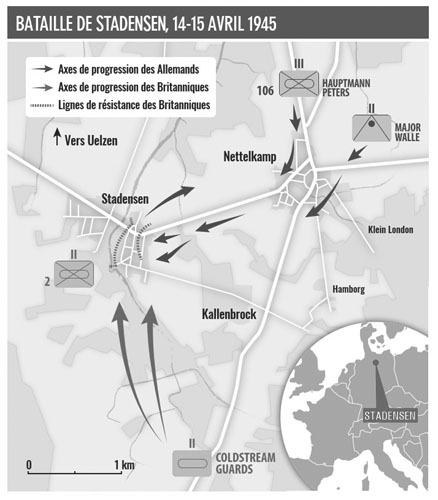
C Sqn of The 15th Scottish Reconnaissance Regiment made their first contact at 11.30 hrs at 695631 and were bazookad by Hitler Youth. Thereafter they reported periodical small contacts with bazooka teams and odd parties on the ground, but they pushed on. By 1610 hrs they reported the village of BOKEL clear and had collected 170 PW. They appeared to have caught these people completely by surprise. Later in the evening a released prisoner of war reported that the village of Nettelkamp 920799 was held by SS Troops and that one tk and 6 half-tracks had left the village heading NORTH to the village of WRESTEDT 7092. C Sqn of the 15th Scottish Reconnaissance Regiment, followed up to this village and found WRESTEDT clear. They were ordered to concentrate for the night and selected the village of Nettelkamp
'A' Sqn's further task was to recce due NORTH when they reached the area of the rly line by GRAULINGEN 8182 and HAMERSTORF 8383.. 227 Bde had got up during the night to approx HOLDENSTEDT 8783 where they were held up by considerable opposition assumed to be the outer defences of the UELZEN Garrison.
'B' Sqn were thereupon ordered to send an Officer patrol out at once to try and find out the situation. Their route was to be SUDERBURG 8381 - X Tracks 867804 - STADENSEN - NETTELKAMP. A liaison officer arrived at about 1020 hrs from STADENSEN who stated that the Glasgow Highlanders have also been counter-attacked during the night and there had been considerable confusion. Some of their pls had been overrun, but that the situation was under control. He stated that Nettelkamp was believed to be in enemy hands.
C Sqn of the The 15th Scottish Reconnaissance Regiment - NETTELKAMP BATTLE
Meanwhile contact had been gained at last with C Sqn who confirmed that there had been a heavy counter-attack starting at about midnight and continuing until dawn. [The German counter-attack was delivered by the Panzer Division "Clausewitz", a force formed specially to thrust deep into the advancing armies' lines of communication.] After holding out until dawn the Nettelkamp village was evacuated. The counter attack was put in with tks, SPs and half-tracks. The attackers must have either been drugged or drunk, as many of them took crazy risks, howled and screamed like Red Indian tribesmen. The attack was led by inf in rubber boats who had very detailed information of our posns, followed by half-tracks with 20mm cannon who came down the centre of the main street, and supported by SP guns which circled the village and fired into it. Part of this enemy force must have been detached to Nettelkamp while the remainder of the force went on to the 2nd G.H. at STADENSEN.
The strength of the force can be gauged from the fact that one member of C Sqn counted no less than 3 Mk IV Tks, 8 SPs and 29 half-tracks going through the village to STADENSEN. It was obvious that the local inhabitants had given detailed locns of all the tps to the Germans, because as soon as the men left their billets to take up action stations on the alarm being given, Spandaus opened up on all exits, and almost at once SPs started shelling the buildings that were occupied by our men and set them alight. [They had used their white flags of surrender for signalling, and sent messengers to the Panzer Division Clausewitz.] This meant that it was impossible for the men to get to their vehs, as these had been parked tactically around the houses that we had occupied. [Sgt Major Albert Ward was wherever the fighting was fiercest, using Bren and rifle and PIAT and the grenade which destoyed a Spandau position. Cat Liddell and the sergeant major [Daddy] were the last to leave. No one had reckoned with a determined German attack so shortly before the war was virtually over.]
'B' Sqn
The 'B' Sqn patrol, after observing for some time from the edge of the woods in area 833802, pushed fwd into the village of NETTELKAMP with some inf carriers. Here they found considerable chaos, and 60 enemy gave themselves up from a school-house cellar without a shot being fired, in spite of having large quantities of weapons and bazookas still at their disposal. It is admitted that the village had been heavily shelled by our own guns, but even allowing for this it seems difficult to account for this docility in the demons of the night before - possibly the drug(?) had worn off. 6 half-tracks were also found abandoned in the village. The only opposition to the 'B' Sqn patrol and the inf carriers was a certain amount of shelling from the area of the woods about 9380 - 9480.
C Squadron's fierce encounter at Nettelkamp was with remnants of the Panzer Clausewitz Division; this was a Panzer division created to thrust into the Allied lines of communications. The Panzer Division Clausewitz Division had tried to swoop in behind the advanced allied troops and to cut up the British supply columns. On the 15th April, 16.00: "about 16 German halftracks were discovered abandoned or destroyed in Nettelkamp, ample evidence of the way in which the previous night's counter attack had been completely routed." 4th (Tank) Battalion Coldstream Guards War Diaries.
Causalities of the Nettelkamp Skirmish / Battle:
- 5 men killed
- 14 wounded
- 39 missing, most of whom were captured by the enemy.
- Army Vehicles Damaged: 8 Carriers, 4 Armd Cars and 1 Half-tracks
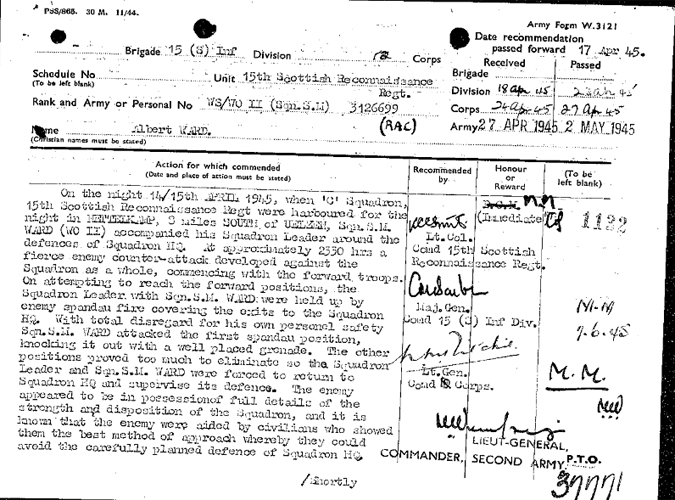
Sgt Major Ward's 15th Scottish Reconnaissance Regiment's MM
Albert Ward: WS/ WO II (Sqn. Sergeant Major) 3126699 (RAC) (my bonnie Daddy)

Action For Which Sgt Major Ward Was Commended:
On the night 14/15 April 1945, when 'C' Squadron, The 15th Scottish Reconnaissance Regiment were harboured for the night in Nettelkamp, 3? miles SOUTH of UELZEN, Sqn. Sgt Major WARD (WO II) accompanied his Squadron Leader around the defences of Squadron HQ. At approximately 23.30 hrs a fierce enemy counter-attack developed against the Squadron as a whole, commencing with the forward troops. On attempting to reach the forward positions, the Squadron Leader with Sqn. Sergeant Major WARD were held up by enemy spandau [Maxim LMG 08/15 machine gun which had a theoretical cyclic firing rate of 500 7.92mm rounds per minute?] fire covering the exits to the Squadron HQ.
With total disregard for his own personal safety Sqn. Sergeant Major WARD attacked the first spandau position, knocking it out with a well placed grenade. The other positions proved too much to eliminate so the Squadron Leader [Capt. Liddell] and Sqn. Sgt Major WARD were forced to return to Squadron HQ and supervise its defence.
The enemy appeared to be in possession of full details of the strength and disposition of the Squadron, and it is known that the enemy were aided by civilians who showed them the best method of approach whereby they could avoid the carefully planned defence of Squadron HQ.
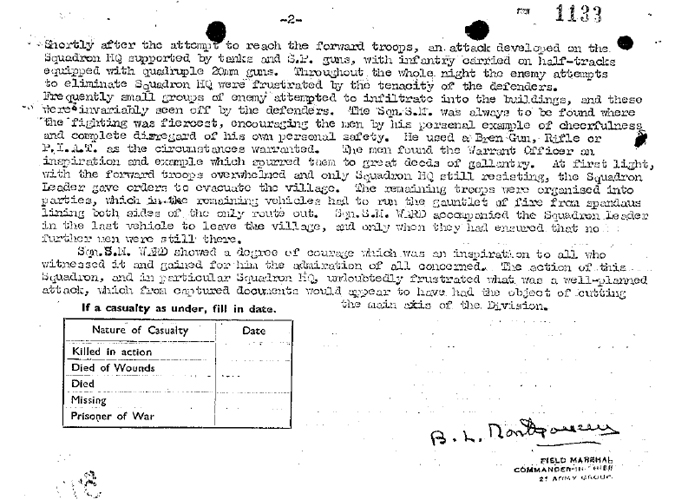
Shortly after the attempt to reach the forward troops, an attack developed on the Squadron HQ supported by tanks and S.P. guns, with infantry carried on half-tracks equipped with quadruple 20mms guns. Throughout the whole night the enemy attempts to eliminate Squadron HQ were frustrated by the tenacity of the defence. Frequently small groups of enemy attempted to infiltrate into the buildings, and were invariably seen off by the defenders. The Sqn. Sgt Major WARD was always to be found where the fighting was fiercest, encouraging the men by his personal example of cheerfulness and complete disregard of his own personal safety. He used a Bren Gun Rifle or P.I.A.T as the circumstances warranted. The men found the Warrant Officer an inspiration and example which spurred them to great deeds of gallantry.
At first light with the forward troops overwhelmed and only Squadron HQ still resisting, the Squadron Leader gave orders to evacuate the village. The remaining troops were organised into parties, which in the remaining vehicles had to run the gauntlet of fire from spandaus lining both sides of the only route out. Sqn. Sgt Major WARD accompanied the Squadron Leader in the last vehicle to leave the village, and only when they had ensured that no further men were still there.
Sqn. Sgt Major WARD showed a degree of courage which was an inspiration to all who witnessed it and gained for him the admiration of all concerned. The action of this Squadron, and in particular Squadron HQ, undoubtedly frustrated what was a well-planned attack, which from captured documents would appear to have had the object of cutting the main axis of the division.
Battle Of Nettelkamp Medals:
The following gallant British soldiers of The 15th Scottish Reconnaissance Regiment were awarded Medals for the Battle of Nettelkamp, Germany:
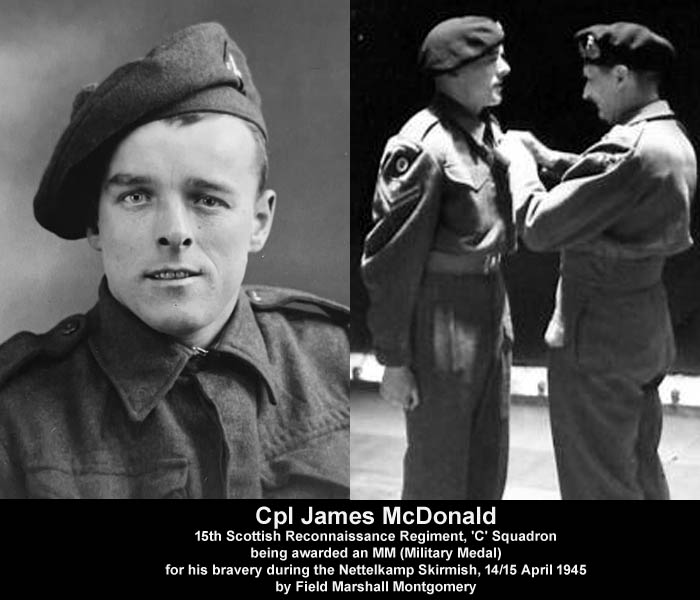
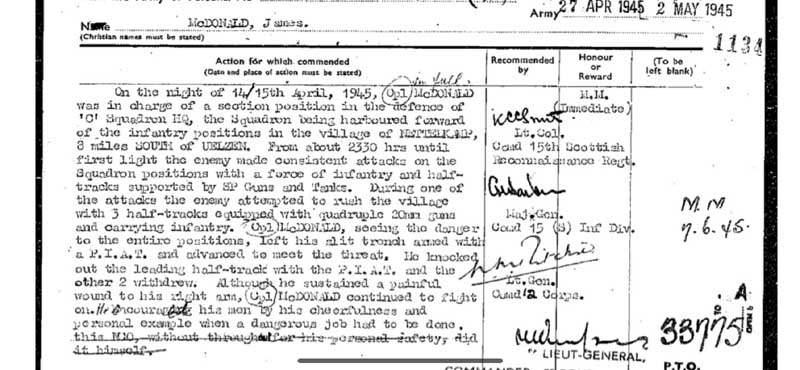
Operation Archway was planned to support the XVIII Airborne Corps Operation Varsity parachute landings across the Rhine river. The force from the Special Air Service would be known as Frankforce. Named after the officer selected to command it, the commanding officer of 2nd Special Air Service, Lieutenant Colonel Brian Franks. Frankforce was made up of two reinforced Special Air Force squadrons, one each from the 1st and 2nd Special Air Service regiments. The force would number about 300 all ranks, mounted in 75 armed Jeeps, some also equipped with 3-inch mortars.
C Sqn on the left reported the villages of SECKLENDORF 9205 and EDDLESTORF 9309 clear by about 0930 hrs, and progressed very rapidly up the centre line through BAVENDORF, THOMASBURG and NEETZE without meeting any real opposition. A number of PW were taken, and a large PW camp of both AMERICANS and BRITISH was discovered just WEST of BAVENDORF 9415. 11 Armd Div on our left took over the responsibility of this camp. The 'C' Sqn continued to tap out from NEETZE towards the R. ELBE but on approaching the banks contact was made on the approaches to the small town of BLACKEDE 985248. It was clear that fairly strong outpost posns were established on rds running into the town. C Sqn set up their HQ at NEETZE and remained in posn of observation on the rds running into BLACKEDE. [In NEETZE C Sqn found an international circus - the lions and beers were missing. Rumours were they were killed by panzers or in a Typhoon attack. The circus performed for the soldiers.]
'B' Sqn on the right met far more opposition, on all the rds running into the large forest of GOHRDE. Civilian reports of enemy mov, made it clear that the Germans were using the forest as some sort of a collecting place for his remnants prior to getting them across the ELBE.
In the late afternoon orders from Div HQ were received to the effect that the Regt was to protect the right flank of the Div from incl GARZE to incl BAVENDORF, a distance of some 14 miles. To do this the Regt was deployed as follows:
'A' Sqn, RHQ, and HQ SAS at NEETZE
C Sqn at THOMASBURG
'B' Sqn BAVENDORF
[It was from Polish displaced persons that the regiment learned that Germans had buried documents in a wood outside of NEETZE. THE RSM superintended 2 days of digging which uncovered more than 30 large steel filing cabinets containing records of the Reich Arbeitsdienst (labour Battalions), which included personal histories of members of the Nazi Party over a wide area. Preparing for VII Corps, The 15th Scottish Division and 1 Commando Brigade to begin Operation Enterprise - the assualt on the Elbe line and the advance to the Baltic coast.]
C Sqn [went north to KOLLOW] progressed very well and by 0930 hrs were sitting in SCHWARZENBECK, having taken a fairly large number of PW. 'A' Sqn on the left made contact in HAMWADE and were generally held up in that area. C Sqn held the southern half of SCHWARZENBECK and made contact with various enemy troops, incl SS, in the Northern part of this town, on the left in BRUNSTORF 7847 and on the right in the small village 843480. Due to some fast talking on the part of a Troop Comd of C Sqn and the I.O. of the SAS, negotiations were made for the surrender of some 1,800 S.S. troops in the general area. These negotiations dragged out during the whole day and did not in fact come to fruition, but quite a large number of S.S. troops and offrs did surrender, although in fact the major part did not.
During the day some four to five hundred PW were taken.
By evening the Regt was relieved by 2 Inf Bns of 44 Bde in SCHWARZENBECK and an Inf Bn of 227 Bde came up to help. The Regt by night-fall was located as under:
RHQ, 'A' Echelon & C Sqn - KOLLOW 814445
'B' Sqn (Residue Sqn) & LAD - NEETZE
Regt located as under:
RHQ with C Sqn and A Ech KOLLOW 814445
A Sqn HAMWADE
B Sqn (Residue Sqn) and LAD NEETZE
B Ech in Div Adm Area BAVENDORF
The Scottish Division cleared Saschsenwald and found the Prince and Princess Von Bismarck in a castle at Friedrichsruh.
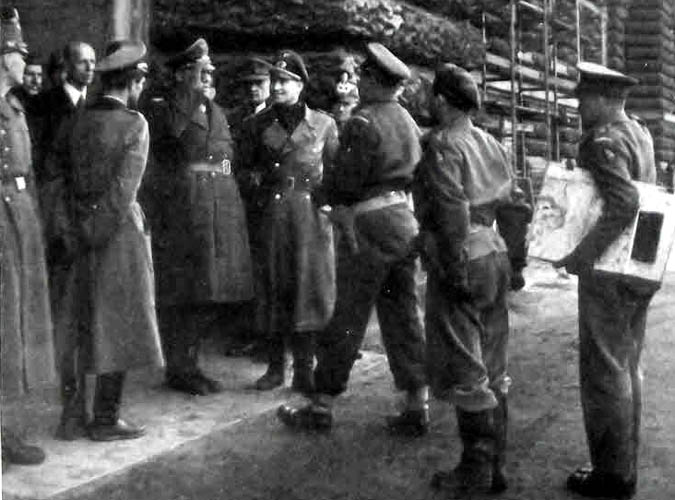
C Sqn on the left had cleared up as far as PAPENDORF and LAGELAKE 6858. C Sqn on the left, having cleared PAPENDORF and area were going to continue on to their objective when they were approached by a German Staff Officer with a Stop Line which he said had been arranged by Treaty and which briefly was a line drawn round the outskirts of the suburbs of HAMBURG. This was referred to Div for their guidance and after some delay it was finally found that this was in fact the initial surrender of HAMBURG. C Sqn were therefore unable to progress any further. A Sqn continued on the rt and captured BARGTEHEIDE, and C Sqn then side-stepped behind A Sqn so as not to interfere with the demarcation line and continued and captured AHRENSBURG.
Up until about 1600 hrs the Regt had taken some 5 - 600 PW. About this time the Commander 2nd SAS Regt was called to Corps, and he and the CO motored up the Autobahn as far as LUBECK, and were able to report the whole line of the Autobahn clear. At about 1900 hrs a flying patrol was sent to FRIEDRISK SRAH 730512 to guard documents of importance to the Allies which were located in the Schloss at this town, which was being used by the SWEDISH and NORWEGIAN Legations.
[Squadrons advanced rapidly to the Hamburg-Lubeck autobahn against confused enemy, who hardly resisted at all. There seemed to be no end to the stream of prisoners. That evening a patrol was sent from C Sqn to FRIEDRICHSRUH to be a guard for the Swiss amabassador and his family, who were in a public house.]
The Regt harboured for the night:
A Sqn BARGTEHEIDE
C Sqn AHRENSBURG [billited in Max Schmeling's (a German boxer who was heavyweight champion of the world between 1930 and 1932) training quarters.
RHQ and HQ 2 SAS, A Ech at GROSS HANSDORF
At midnight Comd 2 SAS, who had harboured his Regt at BORSTAL some 2 miles from ELMENHORST, came in to state that one of his jeeps had been ambushed in the area HEIDERFELD 6489. The Burgomaster of that village had come down by bicycle to tell him that a number of SS Tps had set up in the village and ambushed his jeep, and were remaining in the village. OC 2 SAS Regt requested assistance for an early strike tomorrow morning before the "cease fire" came into effect at 0800 hrs. Arrangements to this effect were made. [It was at 18.20 that evening, 4 May 1945, Field Marshal Busch (the Head of German Army Group Northwest, tasked with defending the portion of German coastline along the North Sea) signed the surrender at Field Marshal Montgomery's headquarters on Luneburg Heath. The "cease fire" was to be at 8 am, on the 5 May. Field Marshal Busch died in a prisoner of war camp in England, on 17 July 1945.]
On May 4, troops in northwestern Germany, the Netherlands, and Denmark surrendered; on May 6, they did the same in Central Europe. Karl Dönitz had started negotiations with the Western Allies, hoping to reach a separate peace. The Western Allies did not agree to this. Rather, they stuck to their agreement, which stipulated Germany's unconditional surrender to all Allied forces, as the only acceptable end to the war.
The striking force under the CO of 4 car patrols with mortars and A/Tk guns, and 2 Sqns SAS, RVd at LEEZEN 6588 at 0530 hrs. Patrols pushed into HEIDERFELD and met no opposition, but a jeep was found abandoned and shot up. On enquiries locally it was confirmed that about 60 SS had been in the village the night before when the driver and co-driver of the jeep had been very badly wounded, if not killed. The remaining two occupants of the jeep were slightly wounded. The enemy had withdrawn from the village about 2 hours before we arrived. Patrols then pushed on through TODESFELD 6091 to BARK 6193 where they caught up with about 10 SS who were taken prisoner. They stated that the main force had withdrawn into the forest at SEGEBURG with strong posts in the villages of WITTENBORN 6395 WANSTEDT 6398. As the Armistice came into effect whilst we were clearing up the 10 SS in BARK it was decided that no further action could be taken and the force returned to LEEZEN. [That night the tracer from Bofors rose to make "V" signs in the sky.]
Major General Barber issued a Special Order of the day, thanking a 'gallant Division' for all their great achievements, the 15 Recce regiment:
- Had travelled about 1,500 miles in 316 days (since landing on the beaches near ARROMANCHES, Normandy, France)
- Crossed 4 countries: France, Belgium, Holland and Germany
- Crossed 3 major rivers: The Seine, Rhine and Elbe
- Lost 7 officers and 66 other ranks.
- The Division had taken 24,500 prisoners of war and the count was continuing
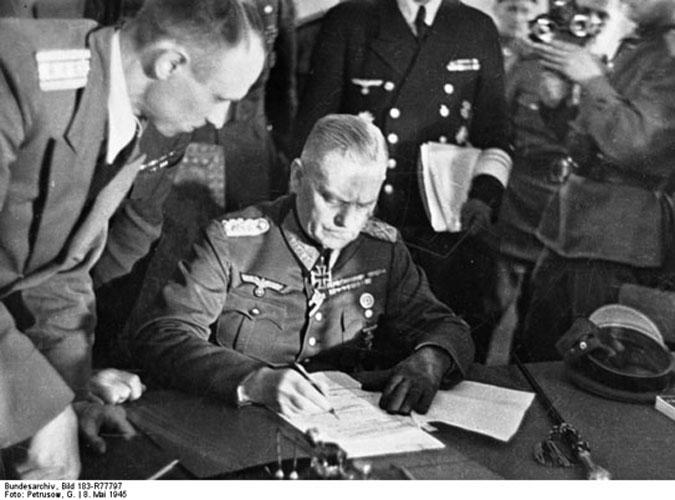
Locns of the Regt for the night:
RHQ, A Ech, LAD ELMENHORST 6777
A Sqn KIEL
B Sqn NERITZE 6880
C Sqn BRUNSBUTEL 5290
During the day the CO was called to Div for an O Gp when it was stated that by arrangements with 8 Corps a GERMAN Force was to attempt to clear the forest of SEGEBURG of the SS who were still holding out in that area. Steps were required to ensure that the main axis BAD SEGEBURG 6896 - NEUMUNSTER 4711 was not interfered with, and the residue Sqn was put out to do this! They took up posns on the morning of the 10th.
Locns:
"A" Sqn - KIEL
"B" Sqn - stops in the Wehrmacht - SS battle on the main SEGEBURG - NEUMUNSTER Rd
RHQ, A Ech and LAD - ELMENHORST
"C" Sqn - BRUNSBUTEL
[At ELMENHORST the regiment had been checking the amazing processions of the defeated German forces along the Hamburg road who were coming from the east and north.]
Locns:
RHQ, B & C Sqns, A & B Echs and LAD - TIMMENDORFER STRAND
A Sqn - KIEL
Regt located as under:
RHQ, A and B Echs, LAD - TIMMENDORFER STRAND
A Sqn - BAD ODESLOE - commitment of VPs (Vulnerable Points) and DPs (Displaced Persons)
B Sqn - TIMMENDORFER STRAND
C Sqn - REINFELD - commitment, control of DPs in that area
Locns of The 15th Scottish Reconnaissance Regiment as under:
RHQ, A and B Echs, LAD, B Sqn - TIMMENDORFER STRAND
A Sqn - BAD ODESLOE
C Sqn - REINFELD
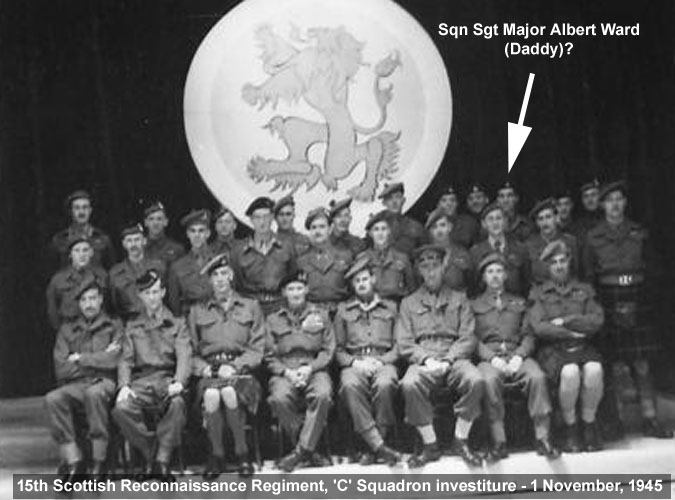
From British-army-units1945on.co.uk and Daddy's Army Records (Personal Number: 434965). Sorry, if I have got some of this wrong.
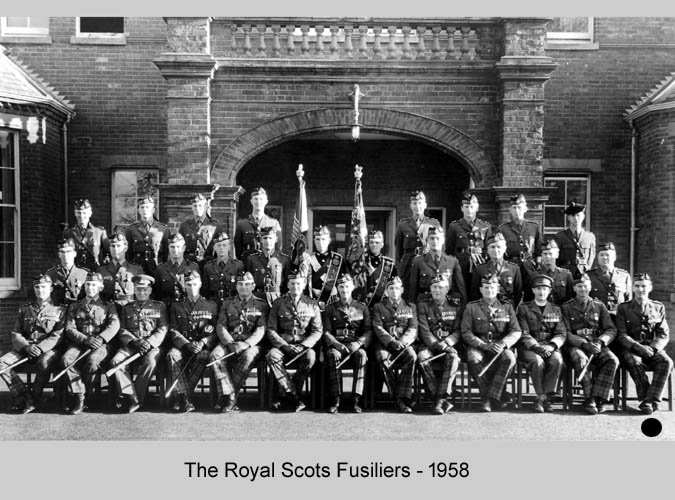
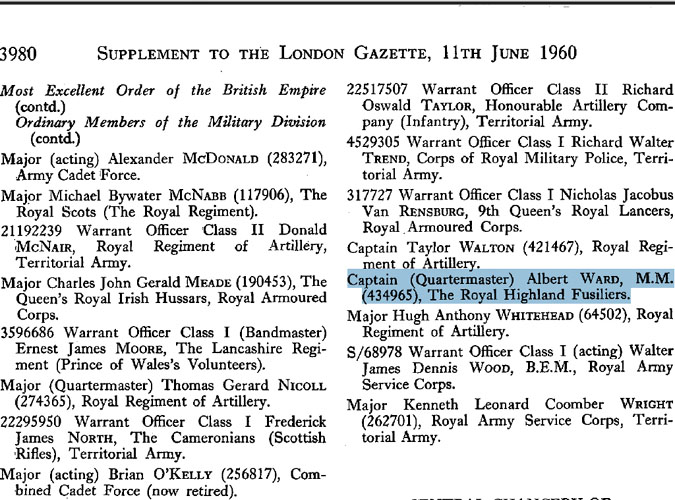
The Royal Highland Fusiliers were formed on the 20 January 1959 by the amalgamation of The Royal Scots Fusiliers, with The Highland Light Infantry). Major Albert ward was the first Quarter Master of The Royal Highland Fusiliers. The Royal Highland Fusiliers regiment was initially based at Redford Barracks, Edinburgh. The Royal Highland Fusiliers motto is: Nemo Me Impune Lacessit (No One Assails Me With Impunity).
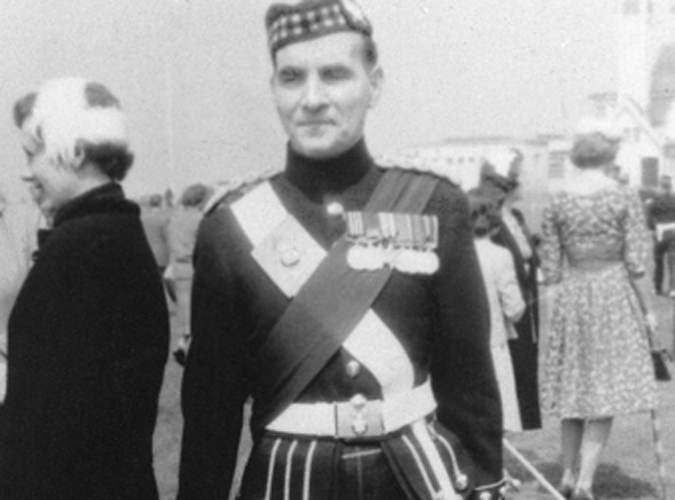
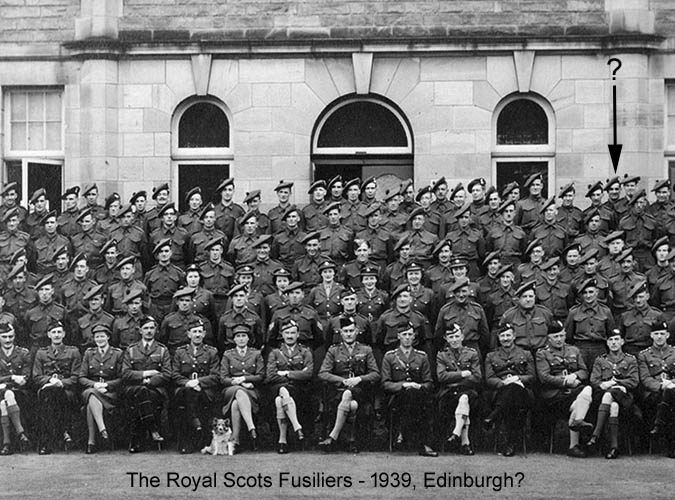
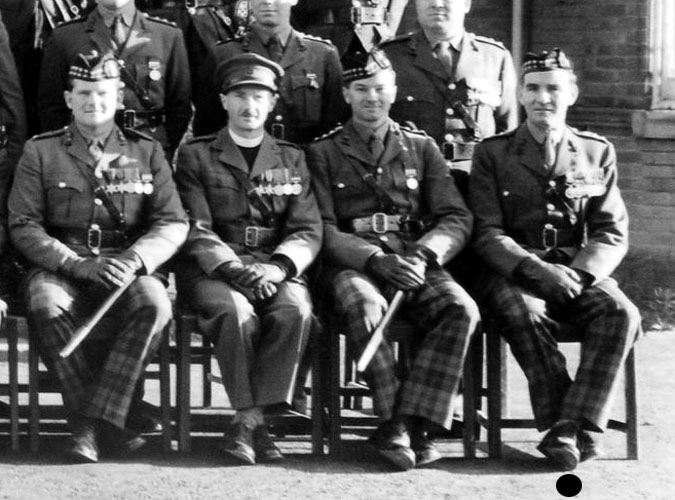
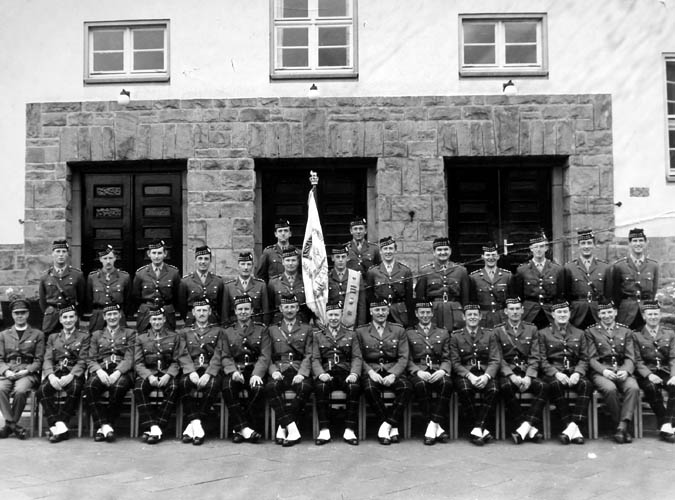
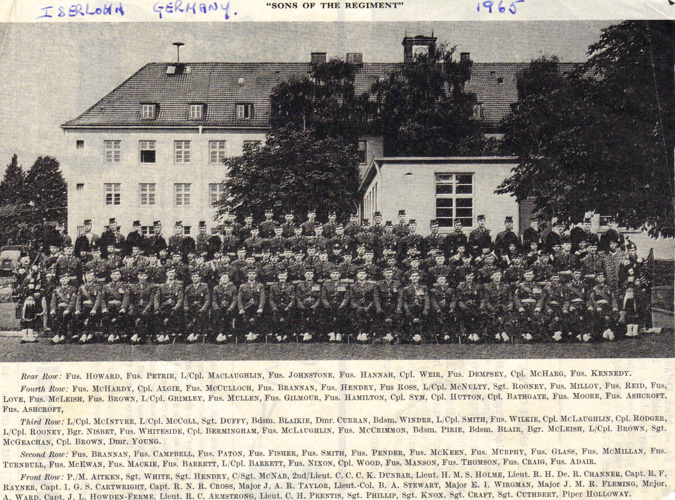
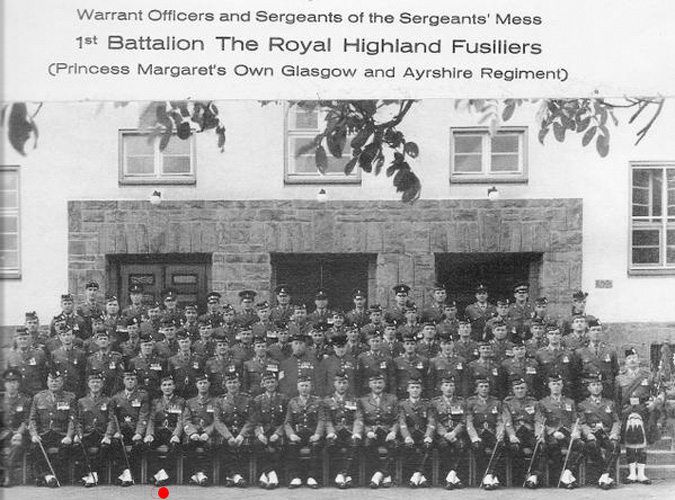
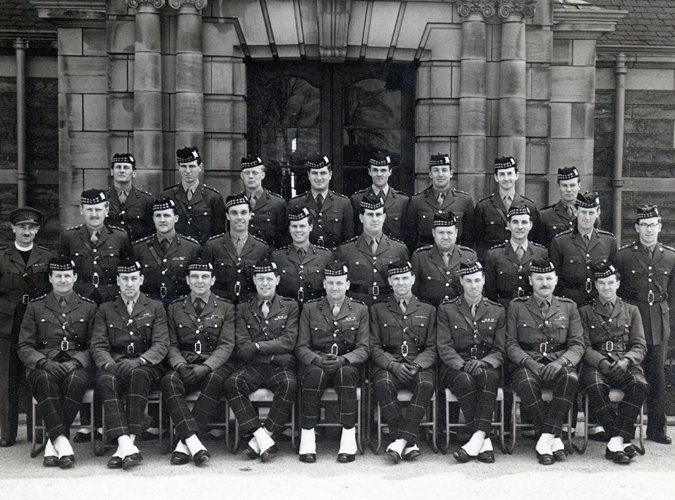
Royal Highland Fusiliers Photos: Major Albert Ward MBE MM of The Royal Highland Fusiliers - 2nd row, 3rd from right
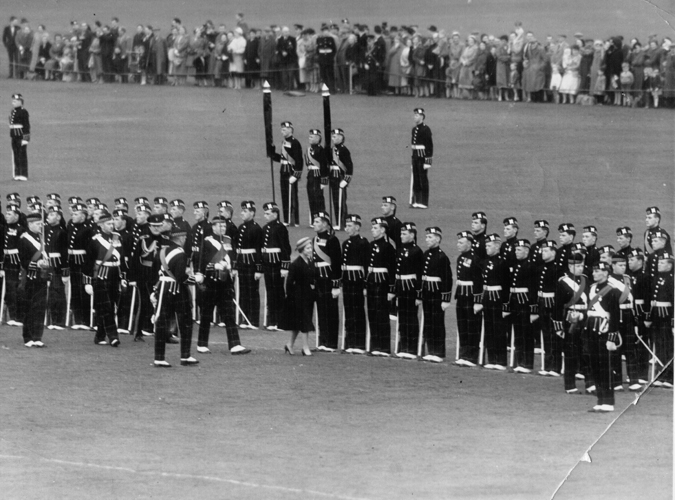
Royal Highland Fusiliers Videos: Princess Margaret visited The Royal Highland Fusiliers, in Iserlohn, West Germany on 1963 (sorry, watch towards the end of the vid).
The 2005 Edinburgh Military Tattoo celebrated Trafalgar 2005: The Massed Pipes and Drums was led by Senior Drum Major Scott McDougall of The Royal Highland Fusiliers. The 2005 Tattoo saw one of the largest gatherings of pipes and drums in the event's history, with 13 bands on parade, including the pipes and drums of all six regular infantry regiments of the Scottish Division including The Royal Highland Fusiliers. Guttingly, this was the last time all six regular infantry regiments of the Scottish Division appeared at the Tattoo prior to the formation of the Royal Regiment of Scotland :(
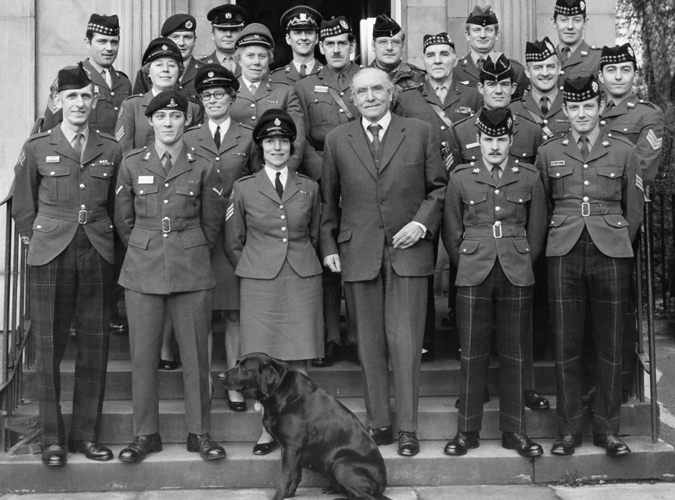
Recruitment Officer for Scottish Army, Rutland Square, Edinburgh, 1970. Major Albert Ward MBE MM - behind the distinguished (not uniformed) gentleman, to the right.
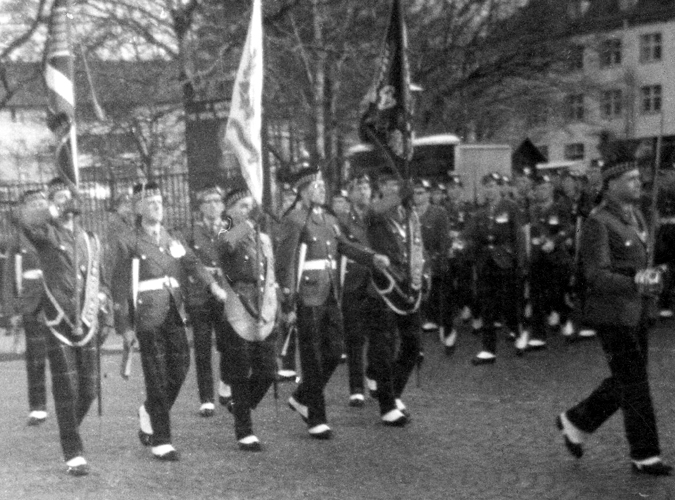
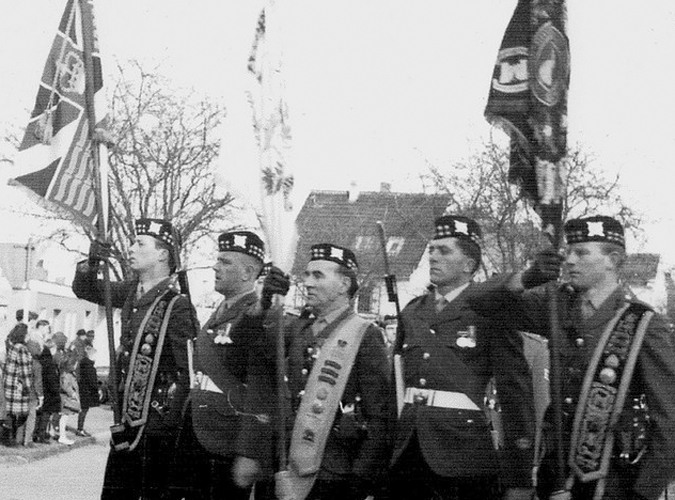
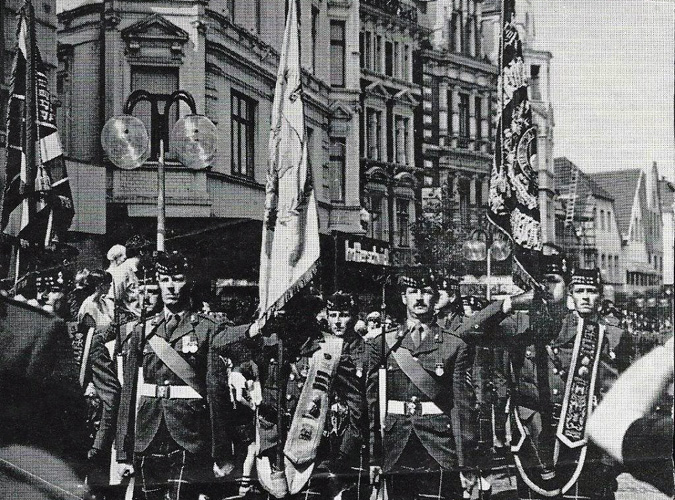
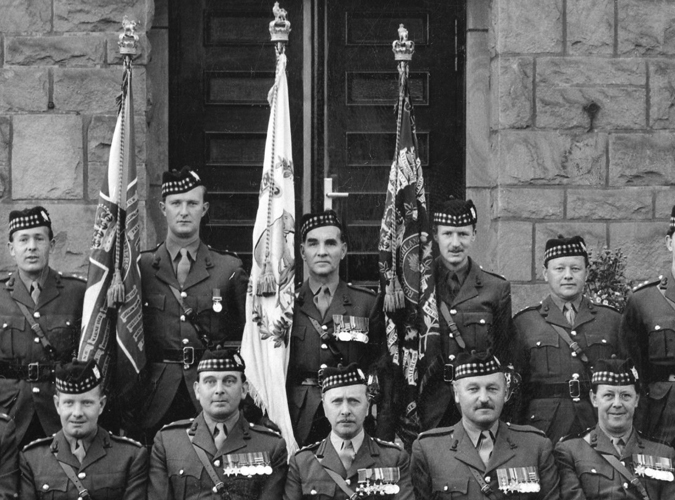
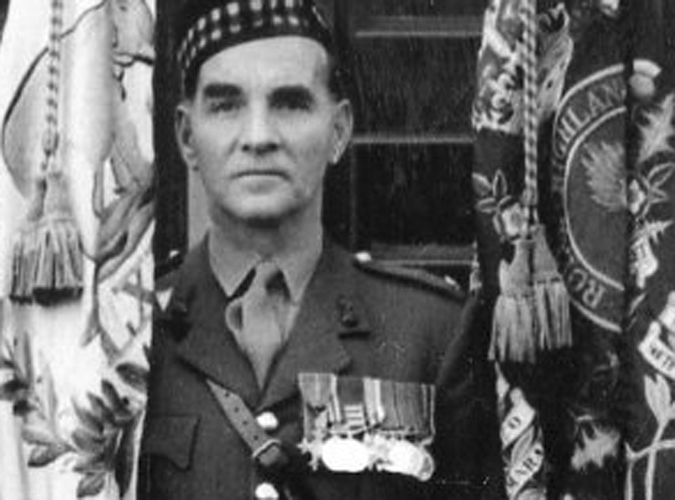
Major Albert Ward MBE MM - is the middle flag bearer in this Royal Highland Fusiliers photo
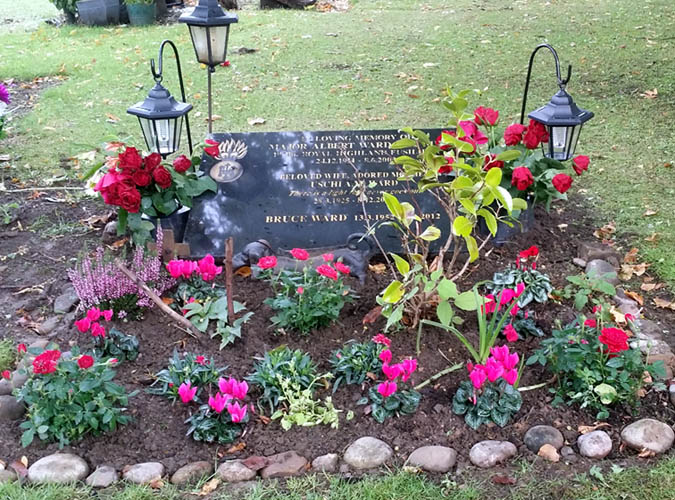
Hugest thanks to so SWEET, Major Willie Shaw MBE who helped us get a fantastic piper (who also got Mummy one on her's :( And such a pro, he sent Mummy a letter as to who attended Daddy's Funeral (which, I have just rediscovered. Hugest hugs to the Royal Highland Fusiliers who attended. To keep their fab names alive:
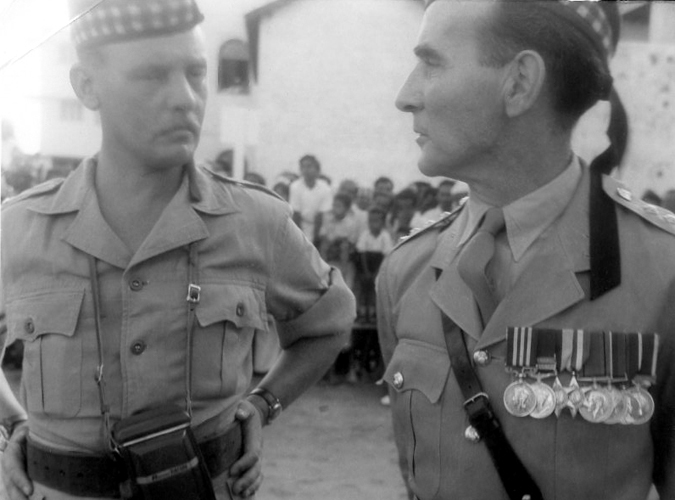
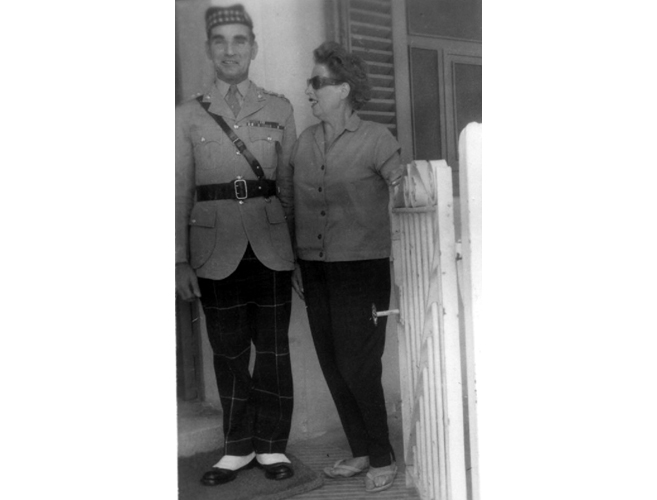
Major Albert Ward MBE MM
| Date of Birth: | 24 Dec 1914, Edinburgh, Scotland |
| Died: | 8 June 2003, Edinburgh, Scotland |
| Occupation: | Major of The Royal Highland Fusiliers |
| Albert Ward's Family Tree: | On familysearch.org (FREE!) |
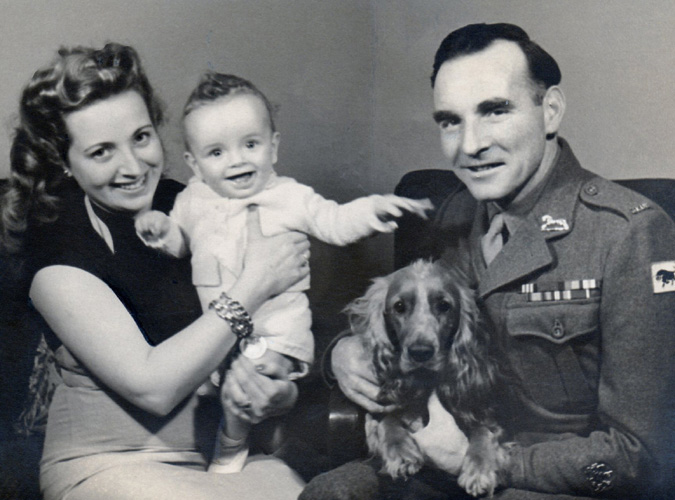
Major Albert Ward MBE MM
Major Albert Ward MBE MM's Wife

Major Ward MBE MM's Daughter - Trischi Ward
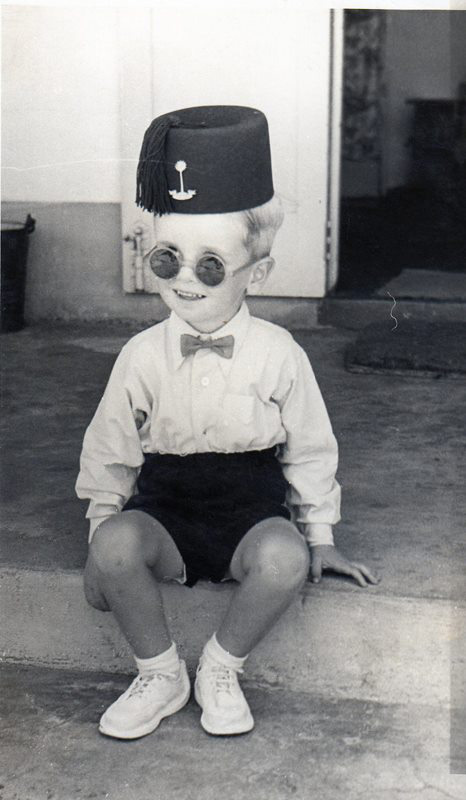
Major Albert Ward MBE MM's Son - Bruce
The Royal Highland Fusiliers
15th (Scottish) Reconnaissance Regiment - France
July 1944. In Normandy, Allied forces reach Caumont.Operation BLUECOAT - France
30 July - 7 August 1944: a British offensive in the Battle of Normandy, to secure the road junction of Vire and the high ground of Mont Pinçon, in France.Operation ESTRY - France
Operation Estry was designed to protect the flank of the Guards Armoured Division, the 4th (Tank) Battalion attacked near Estry in the BOCAGE and follow up an enemy withdrawal from ESTRYOperation PHEASANT - Netherlands: to clear German troops from the province of North Brabant, in the Netherlands
Operation GUILDFORD - The 44 (L) Inf Bde attack on BLERICK, Netherlands
2 December 1944Operation VERITABLE - The Battle for The Rhineland
8 February - 11 March 1945Hamburg, Germany
Mummy's home townForgive me, I still seek and hope, I find images of my parents